










In late 2020, with COVID-19 restrictions closing land borders and grounding international flights, a team of auditors from Grant Thornton China travelled to the potash fields of Khammouane Province in landlocked Laos. Their client, a Shenzhen-listed fertilizer producer, was acquiring 179.8 square kilometres of mining rights adjacent to its existing operations, a deal that would give it the largest potash resource base in Asia. Before the deal could close, the team needed to verify the reserves, check the inventory, and interpret Lao tax law well enough to satisfy the China Securities Regulatory Commission (CSRC). With Laos under pandemic restrictions, the team combined on-site inspection with remote verification, and drew on tax guidance from Grant Thornton’s Cambodia office and other Southeast Asian member firms.
This network support enhanced audit quality, says Mabel Chan, Deputy Managing Partner of Grant Thornton Hong Kong. “With the valuable support of our fellow GT member firms, we gained a deep, localized understanding of the jurisdiction’s mining regulations, tax policies and statutory frameworks.”
By August 2022, the acquisition had been unconditionally approved by the CSRC. The engagement was technical in nature, but it reflects a broader shift in how Hong Kong’s accounting profession supports Chinese Mainland companies expanding abroad.
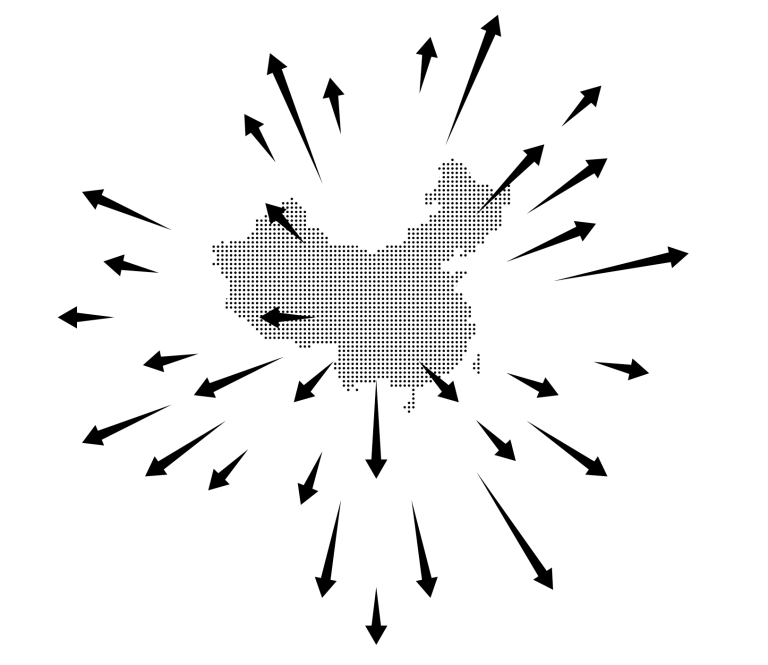
Individually, the work of these firms falls within familiar professional territory: audits, tax rulings and listing documents. Taken together, it shows how the profession has adapted as Chinese Mainland companies move from exporting goods to investing capital, building operations and holding assets overseas.
HKTDC Research has noted that Chinese Mainland enterprises’ overseas expansion strategies now extend beyond simple trade into supply chain integration, cross-border investment, and higher value-added business activity, and this shift is driving demand for professional support. Companies that a decade ago relied on local distributors in Southeast Asia or the Middle East are now establishing factories there, raising capital there and, in some cases, managing the resulting cash flows through treasury operations in Hong Kong. “Chinese Mainland clients are expanding overseas. They need an accounting firm that can satisfy their needs not just in China, but on an international basis. In addition to multi-jurisdiction needs, clients also require multi-disciplinary services across different locations,” says Andrew Lam, Managing Director of BDO.

Hong Kong’s position within this process reflects its regulatory and legal framework. The city follows common law and international financial reporting and auditing standards, and maintains double taxation agreements with a number of the jurisdictions – including Gulf states and ASEAN members – where Chinese Mainland companies are now expanding. PwC’s Loretta Fong describes Hong Kong as a super-connector. “With its unique geographical location, Hong Kong offers both a gateway to Chinese Mainland and a springboard for enterprises expanding globally.”
Some observe a growing demand among expanding Mainland enterprises to establish overseas corporate treasury centres. “Hong Kong remains a preferred jurisdiction for many such clients,” says Jason Chung, Director at Link-Pro CPA. “That said, many enterprises underestimate the financial-system preparation work required. This creates meaningful demand for Hong Kong-based cross-border accounting professionals holding both Mainland and Hong Kong-relevant expertise.”
What Mainland clients actually need help with
Across the experiences of firms, a consistent set of client needs emerges despite the range of industries involved, which include coal, footwear, electric vehicles, machine-vision software and private higher-education consulting.
Several firms have worked with companies seeking a Hong Kong listing, often a secondary one alongside an existing Mainland or overseas listing. Zhonghui Anda helped a leading oil-refining-equipment manufacturer complete a Main Board listing. The firm identifies the main hurdle as the complexity of preparing and auditing the financial statements, although positioning also mattered. With a high volume of Main Board applicants, “the client needed to significantly elevate its corporate governance and overall financial presentation to stand out from fierce competition and secure the confidence of global investors. Our dual-market presence fundamentally shifted our approach from a standard audit to a seamless, cross-regional partnership,” the firm says.
“Chinese Mainland businesses should assess how their reporting can satisfy overlapping regulatory regimes while remaining comparable and reliable.”
SHINEWING acted as joint reporting accountant for an Australian coal producer’s secondary Hong Kong listing, reconciling IFRS disclosure practice across jurisdictions to raise more than HK$1 billion. “A Hong Kong secondary listing requires more than repackaging existing accounts. Chinese Mainland businesses should assess how their reporting can satisfy overlapping regulatory regimes while remaining comparable and reliable,” says Andy Wong, SHINEWING’s China and International Business Leader and IPO Leader. He notes that the importance of advisers in Hong Kong and Australia working as one integrated team rather than as separate work streams: “Ultimately, smooth collaboration requires clear ownership, one timetable, one source of truth, and no surprises.”
BDO’s Hong Kong practice, working hand in hand with the international network’s Chinese Mainland firm, supported a secondary listing that raised over HK$10 billion, using a combined on-site and remote audit approach during the pandemic. Lam attributes this to a common platform and methodology. “BDO uses a common audit methodology and software on a worldwide basis,” he says, adding that the software “allows colleagues the flexibility to work either at home or in the office, which reduces disruption of workflow due to unforeseen circumstances.”
Moore Hong Kong’s advisory arm, Moore Transaction Services Limited, supported a machine-vision and AI company through a Nasdaq listing, preparing the valuation model and market research included in the prospectus. With no obvious comparables, the valuation leaned on discounted cash flow analysis. “This intrinsic, fundamentals-based approach tends to be highly defensible to regulators and serves the overall interests of stakeholders,” says Kenneth Ma, Managing Director of Moore Transaction Services. “For novel machine-vision or AI companies, the Market Approach often presents significant limitations, as it is nearly impossible to identify publicly traded entities or transactions at closely comparable business stages,” adds Ma. A Nasdaq listing carries its own demands: “significant management bandwidth to communicate with US investors or regulators on Chinese domestic market dynamics, consumer behaviour, and the local AI competitive landscape,” says Ma.
Several clients needed advice on where and how to hold overseas investments once made. PwC helped a state-owned construction-machinery group design an overseas treasury centre, comparing Hong Kong against Singapore before recommending Hong Kong, which offers an 8.25 percent concessionary tax rate for qualifying treasury income. “Many companies prefer Hong Kong’s transparent regulatory regime and no reliance on discretion,” says Fong. She sees demand growing as “going out” enterprises are incorporating the establishment of overseas treasury centres into their strategic planning.

Conpak worked with a Chinese Mainland energy group to establish the operational substance now required for Hong Kong entities to qualify for exemptions under the Foreign Source Income Exemption (FSIE) regime. “We see it as compliance with a purpose,” says Hazel Yim, Director at the firm.
SBC CPA restructured a family-controlled footwear group’s fragmented shareholding into a Cayman-BVI structure intended to support both a future listing and succession planning. As the group expanded into European and United States markets, the existing ownership arrangements began to constrain its growth and competitiveness. “Continuing under the existing structure risked limiting further expansion, so we moved quickly to restructure the ownership into a clean, purpose-built pyramid that could support both international ambitions and long-term family continuity,” says the firm. “By separating the public listing vehicle from the private ownership and inheritance vehicle, the same structure simultaneously satisfies listing rules and enables smooth, dispute-free generational transfer.”
Link-Pro’s engagement with a construction-machinery manufacturer centred on converting the group’s Chinese Accounting Standards chart of accounts to Hong Kong Financial Reporting Standards, removing Mainland-specific general-ledger items such as the housing fund accounts and adding Hong Kong equivalents such as MPF contributions, ahead of the client’s planned Hong Kong treasury centre. While chart-of-accounts conversion may seem like a technical housekeeping exercise, getting it wrong brings tangible business consequences, says Chung. “First, incorrect conversion would produce financial statements that fail to comply with HKFRS, raising risks of audit qualification for the Hong Kong legal entity,” he says. Second, “errors originating at the Hong Kong-entity level would distort group-level consolidation figures and erode reliability of the group’s consolidated reporting.” He adds that poorly-executed conversion can create hurdles for licensing approval, undermining the client’s goal to set up its Asia-Pacific treasury hub in Hong Kong.
Other firms were involved in initial market entry rather than capital markets work. WALL CPA helped one of China’s larger private higher-education consultancies establish a Middle East operation, drawing on banking support and company-secretarial services to begin operating in the UAE. “For a Chinese private education consultancy or institution, the UAE is the most practical place to start,” says William Chan, the firm’s Managing Director. He notes that incorporation is rarely the main constraint: “Opening a bank account, in particular, is frequently the real critical path, not incorporation.”
CW CPA supported a Jiangsu electronics manufacturer in opening two factories in Mexico under the US-Mexico-Canada Agreement framework, allowing the company’s products to reach the North American market. On advice from a Mexican legal and accounting firm, the client set up two independent subsidiaries rather than a parent and a branch. “Because each entity is autonomous, legal and operational liabilities remain confined to the respective operation in each city,” says Toby Wong, the firm’s Greater China Manager. CW’s own role was to coordinate the project and handle language support, translation and the Chinese Mainland paperwork.
The challenges
Firms are often managing regulatory divergence for clients. A Mainland company entering a new market is typically expected to satisfy regulators in the Chinese Mainland, Hong Kong, and the destination market, each with different disclosure norms, governance expectations and accounting treatments.
SHINEWING’s Australian client found that even between two IFRS jurisdictions, Hong Kong and Australia, specific disclosure requirements differed. KPMG’s automotive client encountered a further layer of complexity in Belt and Road markets: unfamiliar political, legal, cultural and tax systems, and limited available industry data. The firm says tariffs, market access, foreign ownership and environmental standards “vary greatly from country to country and may change frequently due to the imperfections of their own laws and regulations.”
The COVID-19 pandemic saw auditors unable to travel to Laos, executives unable to travel to Singapore for notarization, and on-site verification being replaced by remote alternatives. EY’s client, a high-end equipment manufacturer, faced a related but separate challenge: geopolitical and trade-policy shifts were exposing limitations in a largely export-based business model, prompting a broader review of its international strategy. For EY Greater China Strategy and Transactions Leader Ben Kwan, the answer is a shift from “product export” to “capability export”.
“One of the biggest misconceptions is that building a factory overseas automatically creates a resilient supply chain.”
“For a manufacturer, ‘capability export’ means going beyond selling products and bringing China’s innovation capabilities to overseas markets,” say Kwan. “It is about evolving from a product supplier into a long-term technology and solutions partner in overseas markets.” He cautions against a common assumption. “One of the biggest misconceptions is that building a factory overseas automatically creates a resilient supply chain. An overseas facility may diversify a company’s manufacturing footprint, but true resilience depends on how effectively the entire global network is planned, connected and managed.”
Cultural and legal differences also feature heavily. WALL CPA’s client operated across Gulf Cooperation Council jurisdictions ranging from the UAE’s relatively liberal commercial framework to more conservative systems elsewhere, alongside local business practices not addressed by standard corporate accounting. “The most common misjudgement is to treat the Middle East as one market,” Chan says. “A model that works in Dubai often cannot be copied into Saudi Arabia or Kuwait without a fresh design.”
Deloitte’s due-diligence teams have identified differences with direct financial consequences – a target’s revenue-recognition policy that created a valuation gap of more than €3 million once restated, or Mexican employment law entitling staff to a profit share with no direct equivalent under Chinese Mainland or Hong Kong practice. Some overseas companies, particularly non-listed ones, report under local accounting standards rather than IFRS. “Differences sometimes exist between local accounting standards and IFRS, which may affect quality of earnings, working capital adjustments, net debts and off-book liabilities under IFRS. The GAAP difference will affect the buyer’s assessments on the financial performance and valuation. Therefore, involvement of accounting and valuation experts in the due diligence for cross-border M&A is important to identify and quantify the accounting standard differences,” says Deloitte China.

The challenge that the firm describes as “most distinctive to Chinese Mainland buyers,” is the time needed for internal and regulatory government approvals. “The key is to consider the internal and regulatory approval path and information required during the M&A process as well as engage with the regulators early on.”
Hong Kong’s own regulatory settings have also changed. The 2023 introduction of the FSIE regime, intended to align Hong Kong with international standards on holding structures, has required firms to build demonstrable operational substance into Hong Kong entities that previously operated with minimal local activity. Yim says Mainland clients now face “restructuring, overseas direct investment filing, transfer pricing, beneficial ownership requirements, FSIE and the OECD’s Pillar Two global minimum tax rules – often all at once.” In her view, “clients do not need isolated advice.”
How Hong Kong’s firms are responding
Firms affiliated with global networks use those relationships to access local information. Grant Thornton China, for example, obtained Laos tax guidance from its Cambodia office. “By bridging critical information gaps and language barriers,” Mabel Chan says, the collaboration “greatly facilitated the smooth execution of our fieldwork.” Local member firms can also carry out on-the-ground procedures such as stocktake attendance, which Chan says “vastly enhances audit efficiency and reduces overall costs for the client.”
BDO’s Hong Kong practice used its network’s audit platform to allow teams in different countries to work from a shared dataset. With member firms in about 170 countries and jurisdictions, Lam says, the platform “enhances audit efficiency by reducing duplication of work by different locations.”
Several firms describe pairing Hong Kong-qualified accountants with Chinese Accounting Standards specialists, or with local-language legal expertise, to reduce the risk of technical concepts being lost in translation between accounting frameworks. Link-Pro’s team combined Hong Kong practising accountants with Chinese Mainland standards experts to convert a client’s chart of accounts. Zhonghui Anda notes that its roots give it “a deep and native understanding of Mainland corporate culture, operational habits, and management models.”
“Providing trilingual documentation did not cause any operational or administrative delays.”
CW CPA produced trilingual Chinese-English-Spanish documentation for a Mexican factory registration to meet local notarial requirements. “Mexican authorities strictly require Spanish for official legal processing, while our team and the local Mexican firm communicated primarily in English,” Wong explains, so the firm added a Chinese translation for the client’s management. “Providing trilingual documentation did not cause any operational or administrative delays.”
Some firms take on work beyond initial advisory recommendations. KPMG’s team spent four weeks in-country benchmarking competitors before finalizing pricing, channel and after-sales plans for its automotive client’s entry into a Belt and Road market. KPMG regards the fieldwork as crucial. “These differences are unimaginable without on-site research,” says the firm, calling the four weeks “not optional, but prerequisites for successfully entering a new market.”
WALL CPA makes a strong case for hands-on support in the Gulf, recommending that clients treat the UAE as “the beachhead: prove the operating model, build a local team, and only then replicate into other Gulf markets. Professional support on structuring, substance, banking and licensing is what usually determines whether that first step takes months or considerably longer,” says Chan.
Where new compliance rules cannot be avoided, some firms build compliance into a broader restructuring of the client’s operations. Conpak’s economic-substance planning for its energy-sector client was structured so that the Hong Kong entity took on genuine regional investment decision-making functions, while also qualifying for a reduced withholding tax rate on Middle Eastern interest income under Hong Kong’s tax treaty network, compared with the rate that would have applied to a direct Mainland investment. Yim says the firm sequenced the work: clarify governance, build substance, secure an advance ruling and a Hong Kong Tax Resident Certificate, then use the treaty network to reduce withholding tax. “We make FSIE work for our clients, not against them,” she says.
As Chinese Mainland companies increasingly expand their overseas footprint, Hong Kong’s accounting firms, of varying size and specialization, are being asked to operate across a widening range of jurisdictions and regulatory regimes simultaneously. Based on the firms' responses, they are approaching this complex, multi-jurisdictional work with a sharp focus, turning it into a strategic advantage that drives the international success of Chinese Mainland enterprises.
The firms included in this article are part of the Institute’s “List of accounting firms helping Mainland enterprises go global”. As of 31 October 2026, this list includes 96 Hong Kong accounting firms, covering details such as firm size, target overseas markets, international experience, and business expertise.