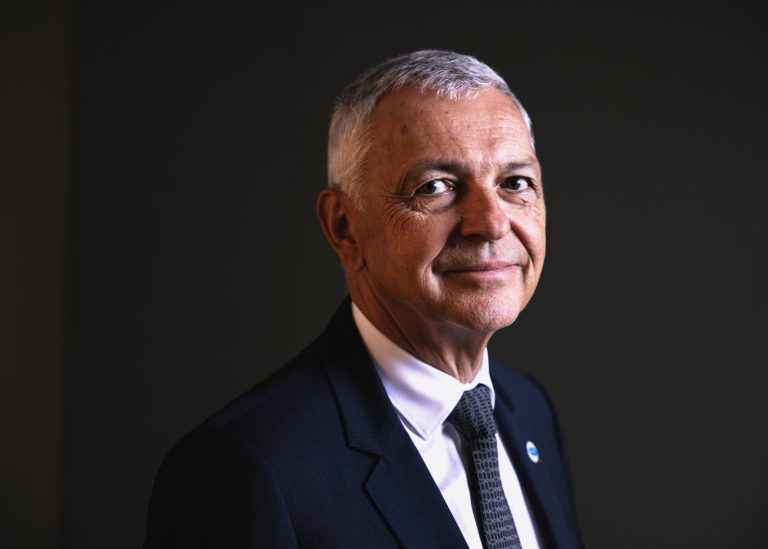





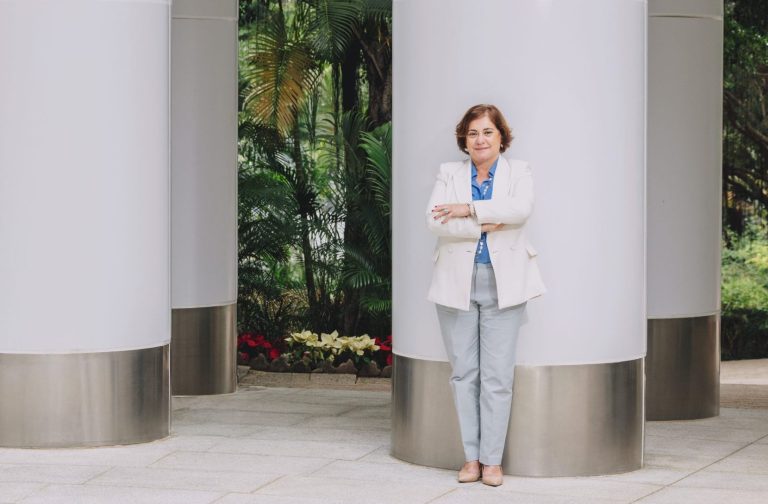


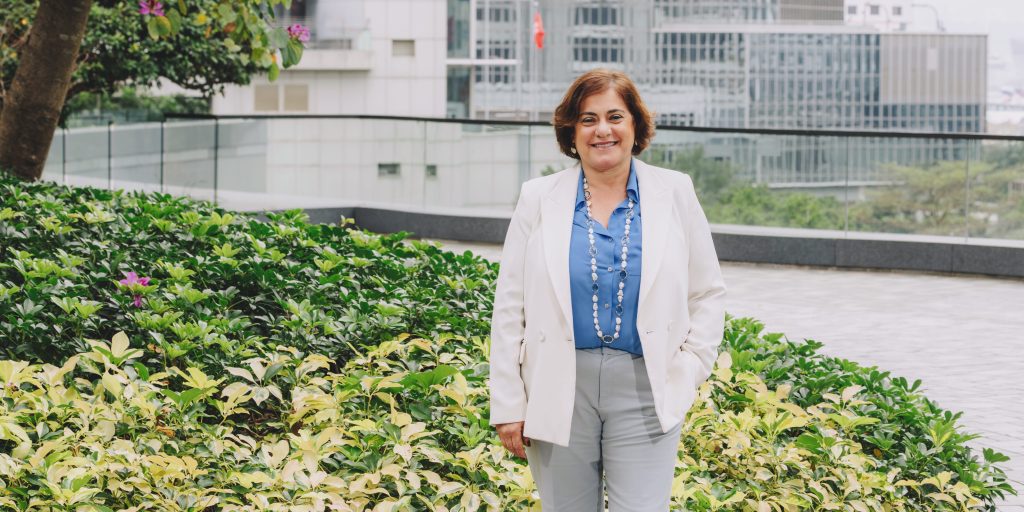
Gabriela Figueiredo Dias is clear-eyed about the challenge accounting professionals are facing. The Chair of the IESBA cautions that in a world increasingly prone to shocks, companies might be tempted by a narrower focus.
“There may be some perspectives or narratives saying that in these times of change and regulatory shifts, the focus should be on competitiveness and profitability, and that ethics matters less. But the facts say the opposite,” says Dias.
As IESBA Chair, Dias is an important player in the debate over setting ethics for accountants amid regulatory shifts and rapid market transformation. “It’s one of the topics that has been keeping us busy at the IESBA, to reflect upon the role of ethics in the context of uncertainty and change. And the conclusion has been, over the last months, that it’s even more important than ever, because ethics plays a foundational and stabilizing role,” she explains.
The reason also lies in the long-term nature of ethics, she says. “It does not change with the politics or with technology. It’s about principles and values, and it anchors the professional judgement of professionals, much beyond compliance. So when the rules are not anymore there, when the exigency of the rules and the regulation is lower, there is something which is common to all professionals globally, and secondly, stable, long term, and intrinsic, which is ethics.”
Dias, who was initially appointed chair in 2022 and reappointed in January 2025, says the start of her second term coincided with significant external challenges. “It was necessary to go back, step back and think, where are the risks and the opportunities for this board? What are we doing, and how, and why?” she recalls. “Without the learning that I did during my first three years, it would have been very difficult to navigate the changing landscape we are in.”
She describes IESBA as being in the business of hard ethics, drawing a crucial distinction. “Our role is not about setting moral rules. It’s not about being nice with people. It’s about professional ethics and the norms that guide the conduct of professionals when doing their job,” says Dias. “Accountants produce, audit or assure financial and non-financial information. They provide tax services. And this has to be done with integrity, but integrity can be subject to many different threats – Conflicts of interest, financial interests, excessive familiarity, lack of knowledge.”
“The conclusion has been, over the last months, that it’s even more important than ever, because ethics plays a foundational and stabilizing role.”
The role of IESBA, she adds, is to set norms that allow professionals to navigate these threats, and “solve ethical dilemmas in a way that is recognized globally as the right way to solve them, and on the other hand, is in the public interest and the interest of the profession.”
IESBA’s International Code of Ethics for Professional Accountants (the Code), adopted or otherwise used in more than 130 jurisdictions, is crucial in preventing reporting failures and even worse problems, such as financial fraud, notes Dias. “If the integrity of financial information is affected and you are the accountant who has that in your hands, you need to make a decision, whether to accept or not accept it. There are a number of paths that you can take, and the Code guides you through these paths,” she explains, bringing up the framework Responding to Non-Compliance with Laws and Regulations, known as NOCLAR, as an example of how standards assist accountants facing difficult situations.
“If taken seriously, these standards can prevent many problems, because with a very light and simple action, you may stop something, which is still small from becoming a big problem.”
Bridge building
As Chair, Dias sees her role as fundamentally about connection. “My role is to set the strategic direction of the board, and to decide on the path to take amid many requests, concerns, and changes,” she says. “But I also see it as a role of bridging different interests, different people, different groups of stakeholders. That’s probably the most exciting and the most challenging role, making sure that these bridges are built and are working for everyone.”
The challenge stems from the ethics organization’s position at the intersection of multiple competing interests. “A global standard setter is surrounded by many people, many groups, many interests, not only because we are global, but also because we are in between the profession and its interests and the public interest,” she says.
Her approach involves active listening. “I need to listen to people, and make sure that the board is working and delivering its products based on what we hear,” Dias says. “That does not mean that we take on board everything and go in the direction of what we hear. It means that we need to be very attentive to everything around us to make sure that when we set standards, make a speech, produce some thought leadership, this is the result of a composition of interests, and of a strategic reflection of the board, based on these different interests, perspectives, and facts.”
That attentiveness forced IESBA to revisit its Work Plan 2025-2026, eventually updating it in June 2025 to support ethical leadership in a time of uncertainty. “By the end of 2024 and early 2025, we realized we needed to stop and think about ourselves, about our role, our purpose, and the way we serve the public interest,” says Dias. “We had some deadlines, some milestones that we were planning to achieve. But suddenly, the world changed around us. At the same time, there was an element of standard setting fatigue. Professionals, professional organizations, even regulators were making efforts to embed, implement, adopt all the standards that we had issued.”
After the pause, IESBA concluded that while its mission and objectives should remain unchanged, it was necessary to adjust how it was working. “We needed to make some refinements and improvements in terms of making sure that what we deliver has the greatest impact and effectiveness. And because of that, in June 2025, the board made some decisions.”
Refreshing the work plan
One element included in the updated work plan is the launch of the SMART framework – which stands for simplification, mobilization, adoption, responsiveness, and targeted action – to guide IESBA’s work. “This is a framework that we are implementing internally for all the projects. This means that, for every project, we need to confirm or check, if what we are doing is simple enough, or could be done in a simple way, if it helps and drives adoption, if it is responsive to what we hear,” she explains.
The framework also emphasizes tailoring engagement to stakeholders. “It’s not about having 100 meetings a year,” says Dias. “We decided to take a more structured approach to outreach and stakeholder engagement, in terms of making sure that all the relevant stakeholders are listened, heard, included in the process, but also that we are close to the stakeholders who need us most.”
Dias notes that the framework also increases accountability. “This means that we will be scrutinized by our stakeholders, against what we say that we are doing. We want to improve our transparency and our ability to explain, why we are doing things in a certain way, and not in another way,” she says.
Another significant decision was to slow down new standard-setting and focus on supporting global adoption and implementation of recently issued standards. IESBA made a commitment not to issue any new major standards before 2027, with the last being the ethics standards for sustainability issued in January 2025.
“This means that we are giving stakeholders a very significant period of time to take care of all the standards that we issued over the last few years,” says Dias. “To be honest, IESBA has issued a lot of standards over the last six years, most of them in the area of independence, which is a more difficult area for the professionals to implement, because they need to change the systems and change the policies. We are all aware of that. So the purpose of the IESBA is not to issue standards, just for the purpose of issuing standards. We need these standards to be properly adopted, implemented, and enforced.”
The IESBA Adoption and Implementation Working Group, which was established in July 2024, plays a key role in the organization’s shifted priorities. “The working group was something completely new for the IESBA,” says Dias. “We are now very much focused on providing support to stakeholders in the adoption and implementation of the standards. We are not just issuing standards and waiting for someone else to take care of them, but taking care of it ourselves, taking care of the baby.”
This introspection, she adds, does not prevent the IESBA from engaging with others. “It’s not limiting us from getting closer to stakeholders, on the contrary, it helps us listen more, be more open, and engaging in a more meaningful way.”
The sustainability challenge
IESBA’s sustainability standards represent what Dias calls “a unique situation and achievement in all of IESBA’s history.” Developing an ethics framework for sustainability reporting and assurance took two years of intense work.
“It’s about conviction. It’s about purpose, and it’s about intense dialogue, bridging the profession and regulators, and being completely sure that we needed to deliver this product in a certain time frame,” says Dias.
The urgency was driven by a call, around 2022, from the regulatory community, that on top of sustainability reporting, the world needed global rules for assurance of non-financial information as well as ethics rules to support both. That led to the development of the International Standard on Sustainability Assurance (ISSA) 5000 by the International Auditing and Assurance Standards Board, and of the International Ethics Standards for Sustainability Assurance (IESSA) and related revisions to the Code by IESBA. Both were concluded in 2024 – an important achievement for both boards. “The world was moving, and the worst result that we could have, and it’s still a risk, is a fragmented world in terms of regulation and standards. Our stakeholders told us that we needed to be fast and bold in developing one ethics and independence framework for sustainability,” says Dias.
“The world was moving, and the worst result that we could have, and it’s still a risk, is a fragmented world in terms of regulation and standards.”
For IESBA, the topic was largely unfamiliar territory, she says, and the process involved unprecedented stakeholder engagement. “The nature and profile of the stakeholders needed to be much more diverse than before, with the issuance of other standards. We needed to include the civil society, investors and specialists to have the peace of mind of having done everything that we could to make sure the standards are of the highest quality possible.”
Now the focus is on making those standards work. Supporting materials for adoption and implementation range from short videos about the basics of sustainability reporting and sustainability issues, to sophisticated technical documents.
The Adoption and Implementation Working Group is also creating jurisdictional profiles to identify priority regions for focused support. “This can involve organizing joint initiatives, providing technical support, having one-on-one conversations. It’s different from jurisdiction to jurisdiction,” Dias explains. “Hong Kong is part of the story. You are one of the top jurisdictions in our priorities.”
Dias commends Hong Kong for being among the first jurisdictions to adopt the international ethics standards for sustainability. “Being an early mover shows the focus and leading performance of Hong Kong in terms of adopting ethics standards and creating a very strong and robust ethical landscape,” she says.
The journey, Dias emphasizes, does not stop with adoption, and Hong Kong, with its institutional strengths, has a “very promising” approach to ethics. “It needs effective implementation, and I think that Hong Kong is well-equipped in that respect,” she adds. “You have a sophisticated regulator but also the HKICPA plays a leading role in ethical education, which is fundamental for everything to work well for the benefit of the profession and the public interest.”
2026 priorities
In response to the ever-evolving landscape of technology, IESBA issued technology-related revisions to the Code in 2023. “We believe that these standards are still fit for purpose and provide the necessary responses,” says Dias.
The challenge, however, is maintaining what makes accountants valuable. “We know that the use of technology is critical for the accounting profession. But it’s fundamental to keep the profession delivering its main product, which is trust,” says Dias. “The integrity of the services professional accountants provide, and the human component of the work, and the professional judgement that they exercise, is where the value of accounting lies. This means that the profession needs to be very aware of the ethical risks that the use of technology and AI may trigger and be able to identify them.”
Technology, particularly AI, is reshaping the chief financial officer role, Dias observes, alongside sustainability reporting responsibilities, and governance requirements. The evolving role of CFOs is being seen as an emerging ethical issue. “Even though the code of ethics already includes principles which apply to professional accountants in business, we are not sure that the code is still fit for purpose when the role of the CFO has been impacted so much by new trends and challenges. At the same time, it’s more frequent that CFOs evolve into CEOs.” This means, Dias adds, that CFOs are increasingly exposed to ethical dilemmas.
IESBA’s new project aims to explore ethical considerations around the evolving role of CFOs, potentially leading to guidance for CFOs on how to handle ethical challenges.
Another area of concern is the reality that not all CFOs are professional accountants. “How do we solve this inconsistency for the benefit of the company and for the benefit of the public interest?” says Dias. “We have already started the job by a pulse survey, and will launch a wider survey to CFOs globally.”
A third key project in 2026 is the development of a framework for Firm Culture and Governance. The global baseline is intended to support accounting firms implement key principles of ethical culture and governance that can systemically drive better individual behaviour, complementing the existing ethics requirements.
A magnet for talent
A good understanding of the younger generation and their traits spurs Dias to describe ethics as critical when it comes to attracting the next generation of CPAs. “I really believe that this is one of the elements that should be intensively used to attract talent to the profession – ethics,” she says. “Even if some companies may seem to leave considerations such as integrity in the shadow, I’m sure that the near future will clarify and demonstrate that the winners are the ones who stick to integrity and ethics, and the new generation is very much part of this evolution.”
“I really believe that this is one of the elements that should be intensively used to attract talent to the profession – ethics.”
Young professionals today, Dias points out, have advantages older generations lacked. “Nowadays, there is no way you can hide something,” she says. This transparency makes them less tolerant of ethical lapses. “Having access to all the information and being a very educated generation, allows them to connect the dots, and understand that reputationally, they wouldn’t want to be involved in something that may be on the front page of the newspaper,” she adds.
For Dias, this represents an opportunity. “Using ethics as a distinguishing element of the profession, namely, for the fact that professional accountants have a unique code of ethics that they need to abide by, is something that will make a difference when attracting and retaining talent.”
Describing her visit to Hong Kong in January, Dias hopes to leave “wide open doors” for effective communication. “This visit to Hong Kong is part of this conviction that there is a very promising path ahead of us in terms of relationship, and there is a very promising landscape in terms of how Hong Kong sees and adopts ethical standards.”
In a world of constant change, Dias sees stable partnerships, built on shared ethical principles, as needed for the profession’s resilience. “The most important thing is that we leave Hong Kong with a sense of reinforced trust, between IESBA and Hong Kong stakeholders, and HKICPA, in particular, and the willingness to collaborate in pursuing common objectives.”
In June 2025, the International Ethics Standards Board for Accountants approved updates to its 2025-2026 Work Plan to better support ethical behaviour and independent judgement in an increasingly volatile and uncertain environment. The revised work plan reflects three key decisions: A resequenced approach to the Firm Culture and Governance project; the introduction of the SMART Strategic Framework; and slowing the pace of standard-setting.