










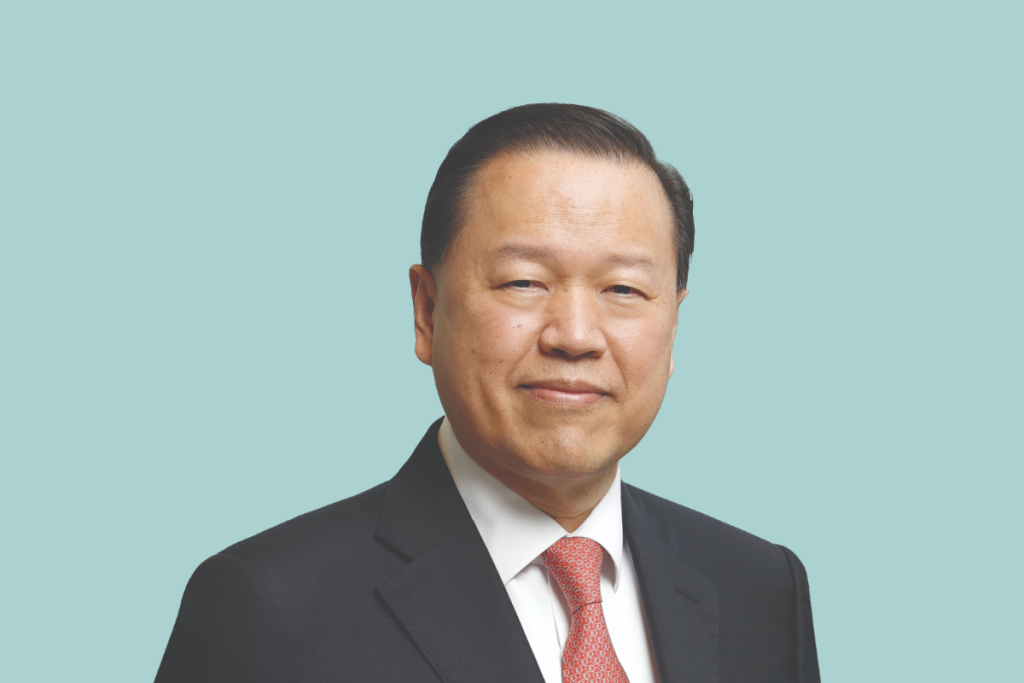
Tim Lui, Past President of the Hong Kong Institute of CPAs
I have been serving as a Deputy to the National People’s Congress (NPC) for the past 18 years. This enables me to stay close to national development agendas and initiatives. A prime example is the 15th Five-Year Plan (2026-2030), which was passed in the NPC plenary meeting back in March.
The 15th Five-Year Plan is an important document that governs the strategic development directions of the nation in the coming five years. However, this is not merely a national issue. Others are keen to ascertain what the Chinese Mainland can bring to the rest of the world in terms of future opportunities.
As a professional with an accounting and finance background as well as international work experience, I leverage such knowledge and exposure as part of my duty and responsibility. There are ample opportunities for me to express views during internal discussions and by making written submissions to the NPC office.
My work does not end with casting my vote in the Great Hall of the People. Back in Hong Kong, I have participated in many briefing sessions to raise awareness and convey the key messages and outcomes of the Two Sessions. I am mindful of the need to keep our citizens and corporates up to speed with national developments and their impact on Hong Kong.
“Accountants can contribute... by being super connectors and super value creators.”
As a speaker at the Institute’s Public Affairs Series event for members held in late March, I was impressed with the high turnout and the quality of the questions raised during the Q&A session. I take pride in knowing that accountants have the passion to learn about national development opportunities in order to position themselves accordingly.
Accountants can contribute to the advancement of the national development agendas during the period of the five-year plan by being super connectors and super value creators. For example, they can consolidate and maintain Hong Kong’s status as an international financial centre, which is one of the fundamental requirements for the nation to become a leading country in finance. Accountants can offer advice, shape the development of capital markets and products, enhance regulatory and tax regimes to improve efficiencies and competitiveness.
They can support the Chinese Mainland clients to go abroad by providing an array of professional advisory services, including due diligence, mergers and acquisitions, taxation, compliance, and risk management. Accountants can also drive professional transformation and upgrading by embracing digital technology and the sustainability agenda.
Accountants, I believe, have an important role to play in contributing to the success of Hong Kong and the nation.

Agnes Chan, member of the National Committee of the Chinese People’s Political Consultative Conference, and an Institute member
As an accountant, I see clearly how our profession has evolved under the 15th Five-Year Plan. No longer confined to the role of record-keepers, we are strategic enablers of national development. The plan explicitly supports Hong Kong in building “10 centres, two hubs, and one ecosystem,” an upgrade from the previous “8 centres” strategy. Within this framework, accountants are vital contributors, ensuring that capital, credibility, and connectivity flow seamlessly across borders.
A central priority of the plan is to support Chinese Mainland enterprises in expanding overseas. Hong Kong’s professional services sector, with accountants at its core, acts as the operational launchpad. We facilitate this process by conducting cross‑border financial due diligence, structuring international tax arrangements, and ensuring compliance with global reporting standards such as IFRS. These services address gaps faced by Chinese Mainland companies unfamiliar with foreign regulations. The launch of the Hong Kong Professional Services GoGlobal Platform by the Department of Justice, supported by the Commerce and Economic Development Bureau, underscores this integrated approach, combining accounting, legal, and financial expertise into a “one‑stop” solution for going global.
“Our profession stands as a trusted partner in national progress, ready to embrace innovation.”
Equally important is Hong Kong’s strengthened role as both a renminbi hub and an international financial centre. Accountants are essential in designing new financial instruments and green finance frameworks that attract global capital to support national infrastructure and sustainability projects. Our work in environmental, social and governance reporting aligns directly with the plan’s emphasis on high‑quality growth and the Beautiful China initiative. By ensuring transparency and robust risk management, we build the trust required for international investors to engage confidently with Chinese Mainland enterprises.
The profession itself is undergoing transformation. Research into digital accounting technologies, from AI‑driven audits to blockchain‑enabled ledgers, will redefine how we deliver value. Our expertise will extend beyond compliance to shaping policy frameworks, guiding investment in green industries, and managing systemic risks in a volatile global economy. In this way, we are not only interpreters of financial data but also architects of reform and innovation.
As the 15th Five-Year Plan pushes for high-quality development, our profession stands as a trusted partner in national progress, ready to embrace innovation, uphold integrity, and help shape a sustainable future for China’s global journey.
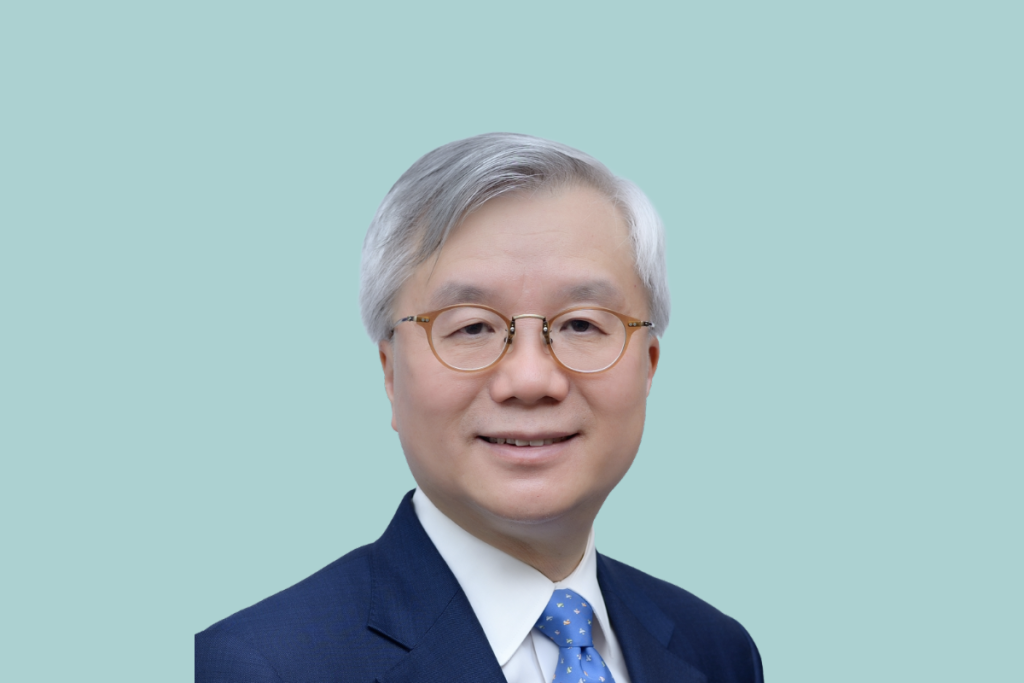
Peter Kung, member of the National Committee of the Chinese People’s Political Consultative Conference, and an Institute member
As China continues its rise as a global economic power and looks to deepen its presence in international capital markets through Hong Kong, the role accountants play in supporting these ambitions becomes increasingly important.
Every economic superpower needs an international financial centre to support its development. The United States needs New York; the United Kingdom needs London. Due to foreign exchange controls in the Chinese Mainland, Hong Kong stands out as the only realistic candidate that can compete with New York and London in the capital market arena to support China’s future economic growth. In fact, a growing number of top-tier Chinese Mainland companies are already tapping Hong Kong’s stock market and bond market to raise funds.
With a gross domestic product of around US$18 trillion, China is the world’s second-largest economy. However, in terms of China’s capital market development, there is substantial room for further development. The market capitalization of U.S.-listed stocks is more than 3.5 times that of Hong Kong, Shanghai and Shenzhen combined, and 10 times that of Hong Kong alone. Likewise, over the first five months of 2026, U.S. stock market turnover was roughly three times that of A shares in the Chinese Mainland and 30 times that of Hong Kong.
“In terms of China’s capital market development, there is substantial room for further development.”
This clearly demonstrates that Hong Kong’s stock market, albeit one of the largest in Asia, has significant room for future growth. The bond market also holds immense growth potential.
The accounting profession plays an indispensable role in the development of capital markets. Financial reports are the main channel through which companies communicate their financial health and performance to investors. When reports are clear, accurate and prepared under recognized standards, they build trust and make it easier for companies to attract capital. If investors do not trust a company’s financial report, will they invest their money in that company? In this sense, professional accounting is not just a technical requirement. It is the foundation of investor confidence and market development.
We need a strong pool of skilled accountants who can protect investors’ interests, so that companies using our capital markets can attract funds locally and globally. We must also invest in robust training programmes to prepare accountants for emerging challenges. Our Institute has a crucial role to play in this continuous professional development. Last but not least, it is essential that accountants’ services are fairly rewarded in order to attract the best and the brightest to join and stay in our profession to help foster the nation’s long-term growth and development.
The contributors of this issue’s Second Opinions were speakers from “Public Affairs Series: The Two Sessions 2026 – Key Takeaways and Implications,” a special sharing session on national development and its implications to Hong Kong held in March. Members can access the archived session here.