



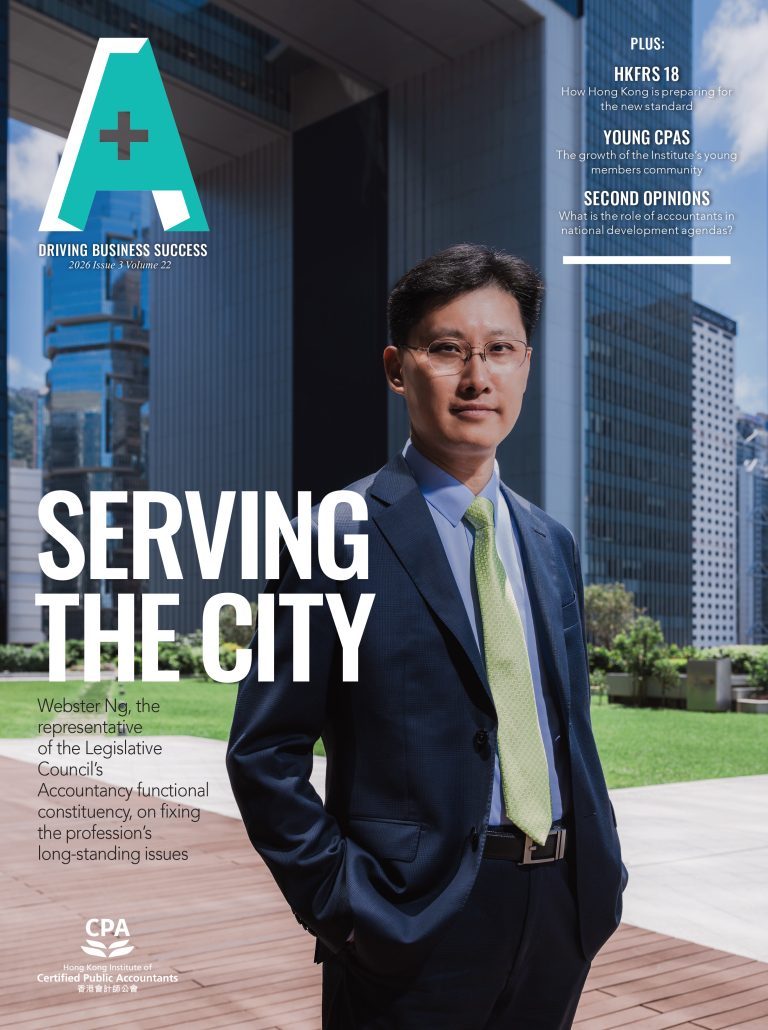

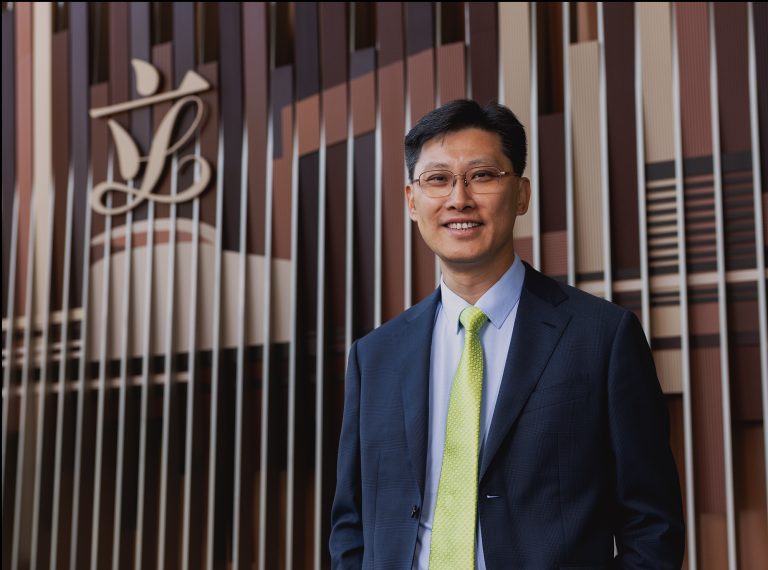



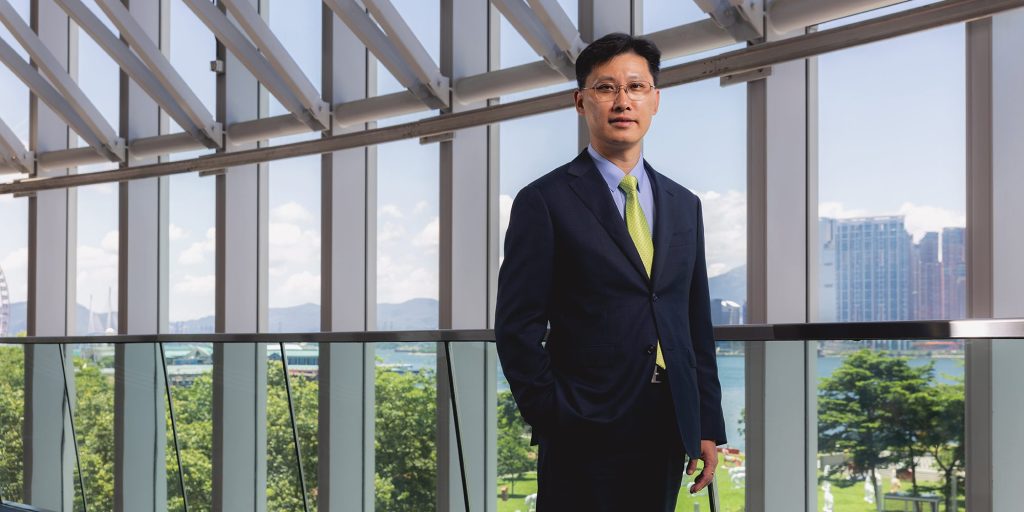
A hefty stack of blue booklets – bills drafted by the government, ready to be scrutinized and voted on by lawmakers – is placed neatly on top of Webster Ng’s desk. He skims through them one by one, reading a few of the covers out loud. “Amended common reported standard; automatic exchange of information; dutiable commodities; tax concessions for shipping-related activities and physical commodity trading – these are all tax,” says Ng. “I was told that there will be at least seven bills relating to tax this year, and that’s not including the financial budget. The tax regime will be one of my most important tasks.”
Ng, the new representative for the Accountancy functional constituency, takes his seat at a time when the government has tabled numerous bills touching tax, and Hong Kong drafts its first-ever five-year economic and social development plan.
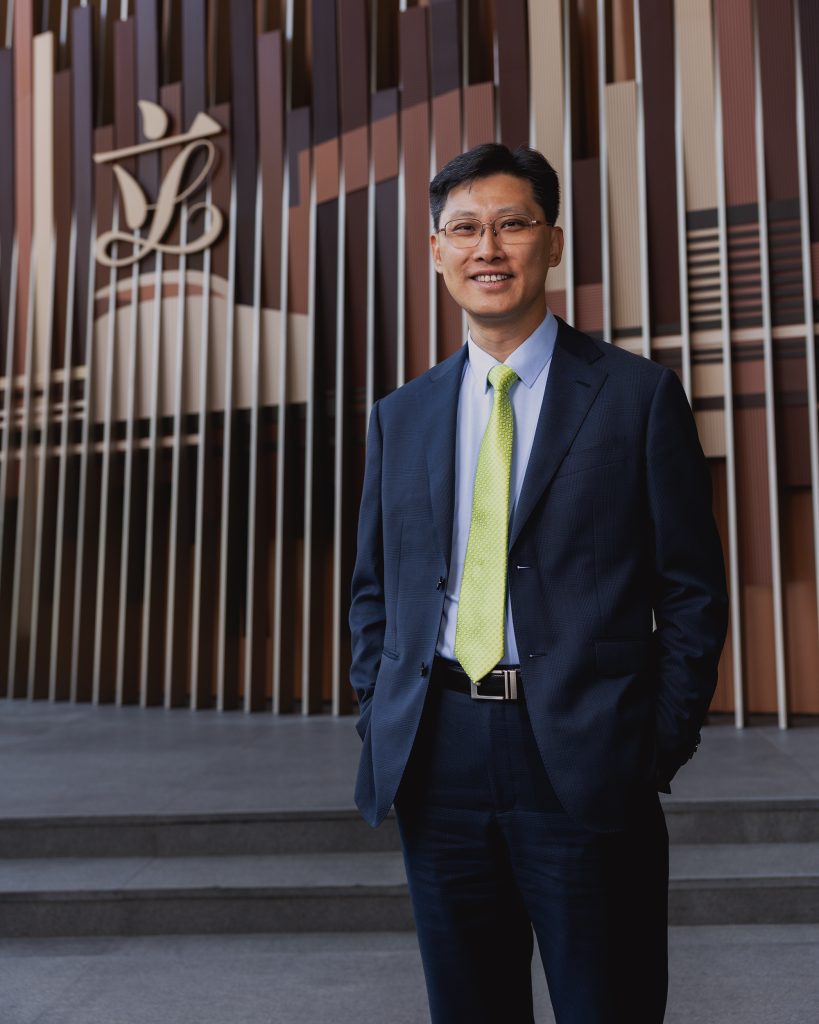
The small- and medium-sized practitioner turned first-time legislator is navigating the legislative work with the same belief that drives him as a CPA who runs his own firm. “My firm’s slogan is all about getting a win-win situation for both our clients and ourselves. My philosophy is that I want clients to grow and get better, so that we can benefit as well,” says Ng. “Serving as a representative in accountancy, I have to let the other LegCo members know what we are thinking and whether the bills we put on the table for debate are good, but not only good for us. We need a win-win or even a win-win-win situation.”
To achieve a win-win situation that meets the needs of Hong Kong accountants, Ng is determined to listen. He says that so far he has been working dynamically to keep up with the concerns and views of the profession. “If many people tell me that something is very important, then I will put it at a high ranking for handling. As the time goes by, the priorities may change,” he says.
Two reforms
Ng’s current focus as a LegCo member is on two reforms, including limited liability reform for professional firms, a proposal which Ng says stalled around 20 years ago. In Hong Kong, accountants in general partnerships remain jointly and severally liable for the actions of their fellow partners, putting personal assets at risk.
Ng is now leaning on LegCo’s research team and a fresh HKICPA task force to rebuild the case from scratch. A lot has changed since the Institute made a submission to the government proposing a reform in professional liability in 2005, he notes. “We need to do research, in particular, to make a comparison between different professions, different jurisdictions, and to see how the bill can be written.” The Institute task force, he adds, has already shared with him what has been discussed so far. “I know that it will take a very long time, and a lot of effort to handle this. It is quite challenging.”
The corporate rescue bill runs even deeper, with attempts to pass this bill going back around three decades. It carries higher stakes, Ng says, because it affects at least three sectors: Professional, labour force, and commercial. He adds that the bill, which had faced strong opposition from labour groups and the commercial sector, is being modified with the aim of pushing the bill through LegCo in the next one to two years.
Signs of movement are showing, as Ng incorporated the bill into a broader non-binding motion on “Developing a strategic tax regime to consolidate Hong Kong’s status as an international financial centre,” which passed LegCo in May. An element of that motion is to enhance the corporate rescue regime for building a more effective corporate restructuring mechanism. “I embedded the corporate rescue bill into a high-level strategic tax regime, and finally, it has passed. I expect that the government will respond given that its ‘4T’ action plan announced in June (comprising tax revamp, tax agreements, targeted promotion, and talent development) directly ties with my suggestion.”
Bringing down the fakes
Another long standing issue that Ng is keen to tackle is fake audit reports or unqualified persons providing audit services. A concern is that such auditor’s reports, that fall short of professional standards, can undermine audit quality and reputation of the profession, he notes. “Faux reports are making SMPs (small and medium practices) very nervous,” says Ng.
Concerned practitioners have told him about audit reports circulating under fabricated or misused firm names. “In some auditorʼs reports, the auditor name is fake or not registered,” he explains. “In some auditor’s reports, the CPA firm’s name exists, but the signing partner does not belong to that firm. After I received these complaints, I sent a letter to the Security Bureau, for requesting immediate follow up, as this is a criminal offence.”
Ng also set up a quadrilateral meeting in May with the Commercial Crime Bureau, the Financial Services and the Treasury Bureau (FSTB), and the Accounting and Financial Reporting Council (AFRC). As of 31 March 2026, the AFRC received 64 complaints of “bogus CPAs”, which refers to unqualified persons providing audit services. The FSTB and AFRC continue to tackle these malpractices in collaboration with the HKICPA.
Beneath the fraud problem, Ng sees a pricing crisis he finds harder to accept. He notes that in some circumstances, those providing audit services when they are not qualified to do so would charge low fees to attract clients, potentially diminishing the quality of financial reporting, and the value of CPAs themselves. “Some members of the profession say this is ‘improper advertising,’” he says. “Of course, with Hong Kong’s reputation as an international financial centre, our profession should not have such low fees. Our audit reports are a safeguard for investors.”
Ng says he is in conversation with relevant parties, including the AFRC, about ways of addressing this issue. He has thought about a QR-code traceability system for reports, based on the practice seen in the Chinese Mainland, but acknowledges that some practitioners are wary of excessive data collection and regulatory overreach. “This is a very controversial issue at this moment,” he admits. “But I will try to see if trade-offs can be made, or if there are other workable options for tracing reports to ensure audit quality.”
Clever tax, not more tax
Ng’s “strategic tax regime” motion is central to how he wants to define his four years in office. He strongly believes in the need to optimize Hong Kong’s tax system. “In my motion, the key wording there is that we are not trying to collect more tax, we want to collect more clever tax,” he says. “Clever tax comes from clever money. We want those high-end enterprises and if a business is not part of this aim, we should strategically put our incentives attracting targeted businesses.”
“In my motion, the key wording there is that we are not trying to collect more tax, we want to collect more clever tax.”
He points to sectors he’d like to see targeted with incentives – aircraft leasing, ship leasing, green shipping fuel, commodity and gold trading – as examples of where “clever” tax design could pull in new business. “As Hong Kong wants to continue being a leading aviation hub, introducing certain tax measures could attract aircraft leasing businesses to come to Hong Kong. We need a strategic tax regime that shows us being very business-friendly.”
He is equally enthusiastic about the new tax policy advisory committee unveiled in the 2026-27 budget, framing it against a broader rebalancing of Hong Kong’s economy away from real estate and financial services. The advisory committee, which had its first meeting on 29 June, was established to enhance Hong Kong’s tax competitiveness and investment appeal.
“The tax regime can be a very important and very strategic one. It is not only about having incentives to get businesses to come.”
“This advisory committee will be very good for getting tax policy reform. We are reformulating our GDP plan so that we are not only highly reliant on real estate and financial services. Instead we want the composition of Hong Kong’s GDP to include different industries,” he says, citing aviation as an example. “The tax regime can be a very important and very strategic one. It is not only about having incentives to get businesses to come. We are asking ourselves, what major GDP components do we want for Hong Kong in the next five or 10 years?”
A historic plan
Ng is positioning the profession inside a process Hong Kong has never run before: its five-year plan, outlining the city’s development and strategic direction. “In Hong Kong, there’s never, ever been a five-year plan. No one knows how to do it,” says Ng. To explore the profession’s role in this, and gather views to help the government in drafting the plan, Ng hosted an industry consultation meeting for the accounting profession on 8 May. “Eighteen different professional bodies, firms from our accounting sector came to have a conversation, a very comprehensive dialogue to provide their views for the five-year plan,” he says.
The consultations pointed him toward the Northern Metropolis as a natural growth area for professional services, with accountants working alongside the entrepreneurs and start-ups the government is trying to attract there. “Professional service could ride on the development of the Northern Metropolis,” he says, noting that LegCo members have visited the area twice to assess its progress. Within that, he sees two clear openings for the sector: helping companies list, and helping them meet Hong Kong’s sustainability reporting standards.
Ng and the other LegCo members have since consolidated the views from different sectors and the research conducted into a formal LegCo submission, which has been presented to the government. The formal document of Hong Kong’s Five-Year Plan is expected to be published within the third quarter of the year.
The AI question
Ng has also been talking to aspiring accountants. He was recently asked by students taking the Qualification Programme whether the profession would disappear in the next five or 10 years because of AI. “I told them that people thought computers would take over our jobs, but instead it enhanced our efficiency. Similarly, the Internet was expected to take over our jobs, but it did not,” says Ng. “With AI, it is not that it will replace you, but the people who know how to use AI can replace the people who don’t.”
“The Internet was expected to take over our jobs, but it did not. With AI, it is not that it will replace you, but the people who know how to use AI can replace the people who don’t.”
Indeed, AI has been widely considered a critical survival mechanism for the accounting profession amid a shrinking talent pool. Instead of replacing accountants, AI automates routine work, and elevates professionals into higher-value advisory roles.
On the talent shortage issue, Ng says that accountancy’s addition to the government’s Talent List on 1 March 2025 has produced a thin pipeline. A year after the accounting profession had been included in the Talent List, Ng raised a question to the government about the results of the update and its initial effectiveness. “Figures tell the story,” he says, adding that as of end-March 2026, 63 people had joined the profession since the inclusion of accountants in the Talent List.
“There’s been some improvement in the past two years, particularly with the increase of high-end talent joining the profession. But one thing we need to focus on is the shortage of junior level or semi-senior level staff to handle routine audit work.”
He traces part of the problem of low junior talent to public perception. “You’ll see that in most films, they seldom show an accountant. And people still have the perception that being an accountant is very tough. So we need to change that for the teenagers and the fresh grads, and solve the problem at the root cause,” he says.
SMPs and the Greater Bay Area
SMPs are pressing Ng on proportionality in regulation, which he illustrates with an analogy from one SMP about being handed an airline pre-flight checklist for starting a car. “It’s too safe, too comprehensive, and sometimes not practicable,” he says of blanket compliance rules applied evenly across the Big Four, mid-tier firms and small practices. “The rules should be the same, but SMPs think the level should be on a proportionate basis.”
In the Greater Bay Area (GBA), he sees the vast work opportunities there for all accountants, but there are obstacles to overcome. “We’ve been keen on seeing whether we can have an exchange on professional status, allowing Hong Kong accountants to be mutually recognized in the GBA and work there easily,” says Ng. The other issue, he adds, is that Hong Kong CPAs would need to be prepared to open up the Hong Kong market to qualified GBA professionals if a mutual recognition status comes into effect. “Given the size of the GBA, accountants are very concerned about the competition. So there’s two streams.”
He points to his own track record securing mutual recognition for chartered tax adviser status during his time as President of the Taxation Institute of Hong Kong. “I see this as more of an opportunity than a challenge because the GBA is a much larger market. If we drive it through a progressive scheme, then some members may see the benefits first.”
The busiest year yet
Ng was fast asleep when his political career began. It was 6 a.m., and the newly elected LegCo member was slumped in his chair, unaware the result had already gone his way. “I was pushed awake by a colleague sitting behind me. He told me, ‘You won!’”
Ng assumed the transition would be manageable, but reality corrected him fast. “At first I thought I could go to my firm in the morning, put down all my stuff for my staff to follow up, and then come back by the end of the day to sign the audit report,” he says. “But after the first day at LegCo, I realized I couldn’t do that.” Ng now mainly manages his firm remotely, carving out “around half a day per week” to return to the office.
Since being sworn in on New Year’s Day, his diary has been full. Each bill that reaches his desk, he says, needs independent scrutiny rather than rubber-stamping. “I found that we need to do in-depth statistics and research,” Ng explains. “The bills they put on the table for our assessment, I would say they are mainly focused on the government’s own views. So we need to raise the concerns of the accounting sector, and let them know what the sector is thinking.”
Ng has long had a deep interest in supporting the profession. He traces his current role to two decades of being involved in different professional associations, including the HKICPA, ACCA, and the Society of Chinese Accountants and Auditors. Ten years ago, he went beyond accounting, and started serving on government committees, including the Education Bureau and the Social Welfare Department. “They are not solely related to accounting, but I’m using my professional expertise to serve them,” says Ng.
Despite having spent considerable time contributing to society, Ng notes that running for LegCo wasn’t originally on his radar. “But that serving spirit has always been there.”
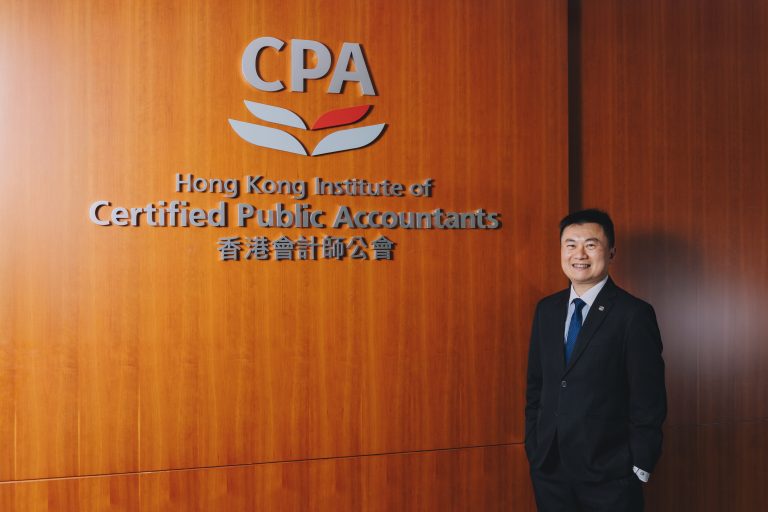
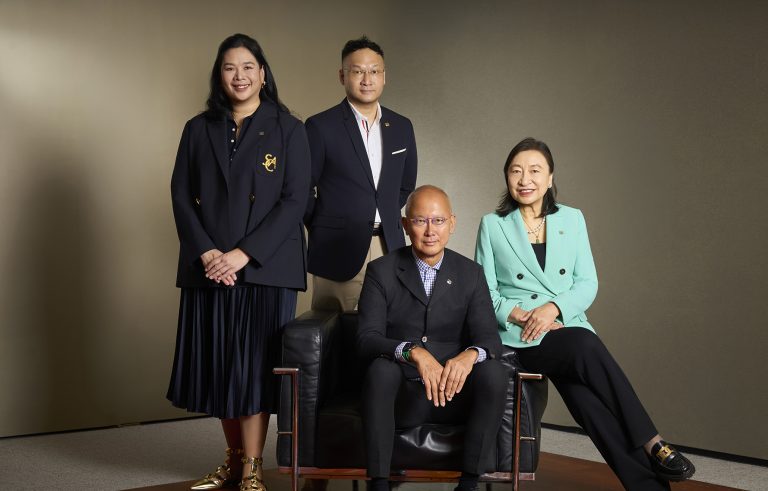
On 8 May, Webster Ng hosted an industry consultation exchange to gather insights for the drafting of Hong Kong’s first five-year plan. The Institute offered policy recommendations on supporting Chinese Mainland enterprises “going global” through enhanced accounting services; expanding opportunities for Hong Kong professionals in the Chinese Mainland; and integrating digital tools, ESG, and AI ethics into accounting education, to ensure the profession’s transformation in the coming five years.