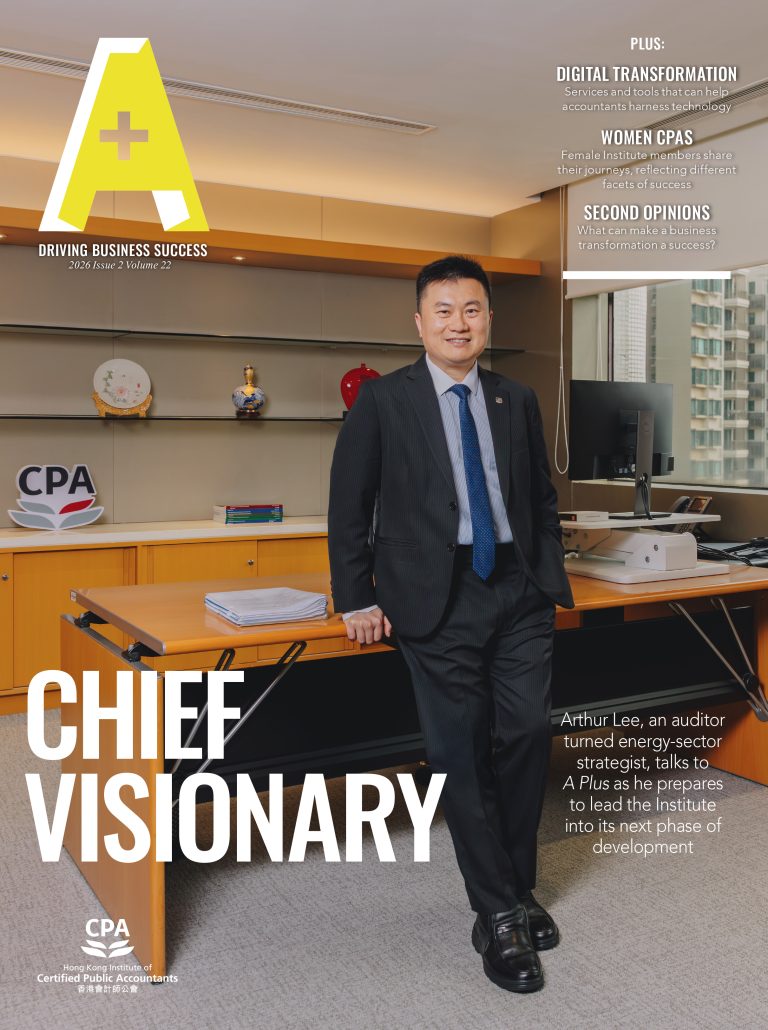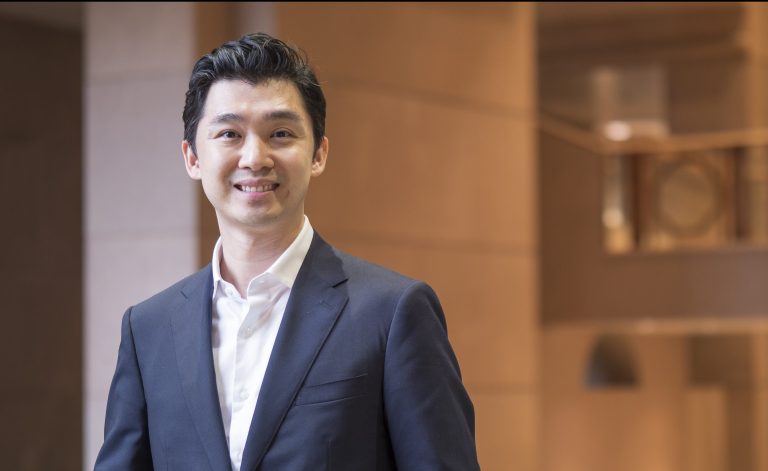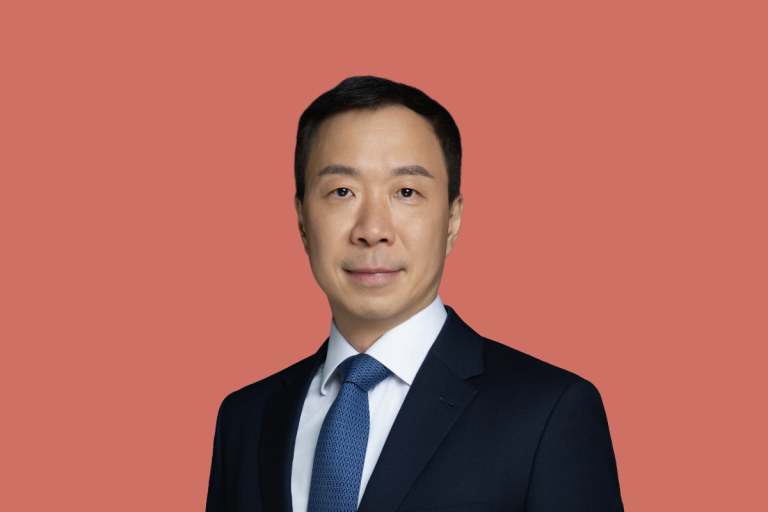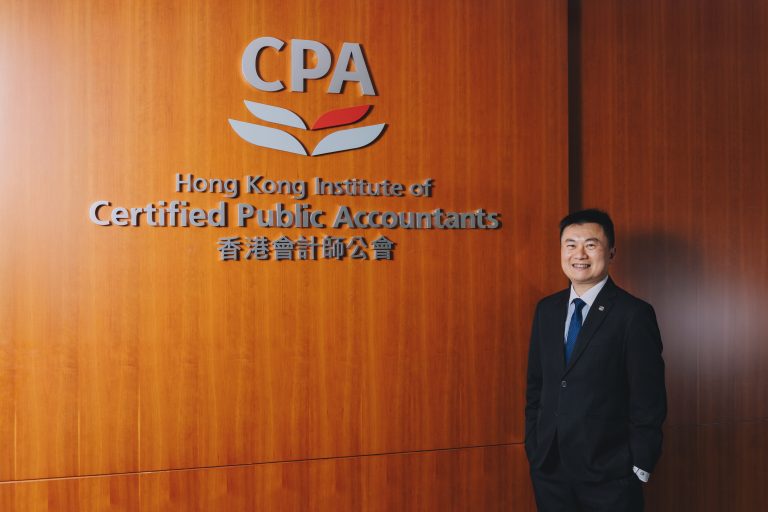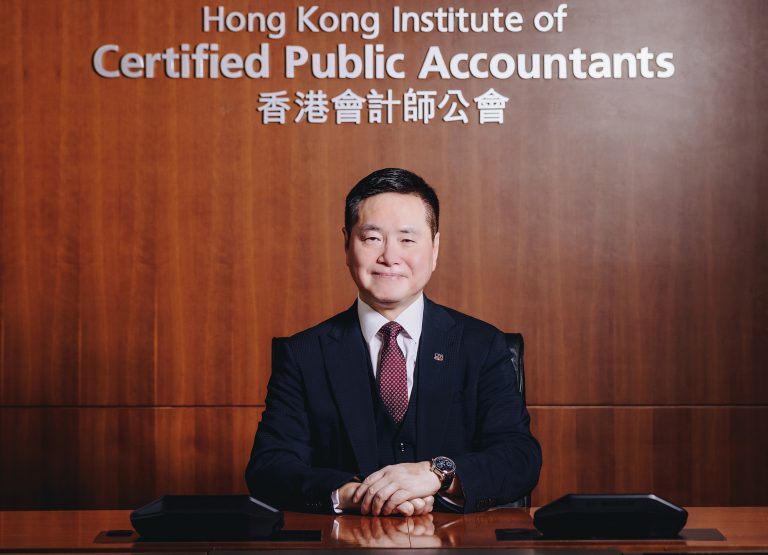




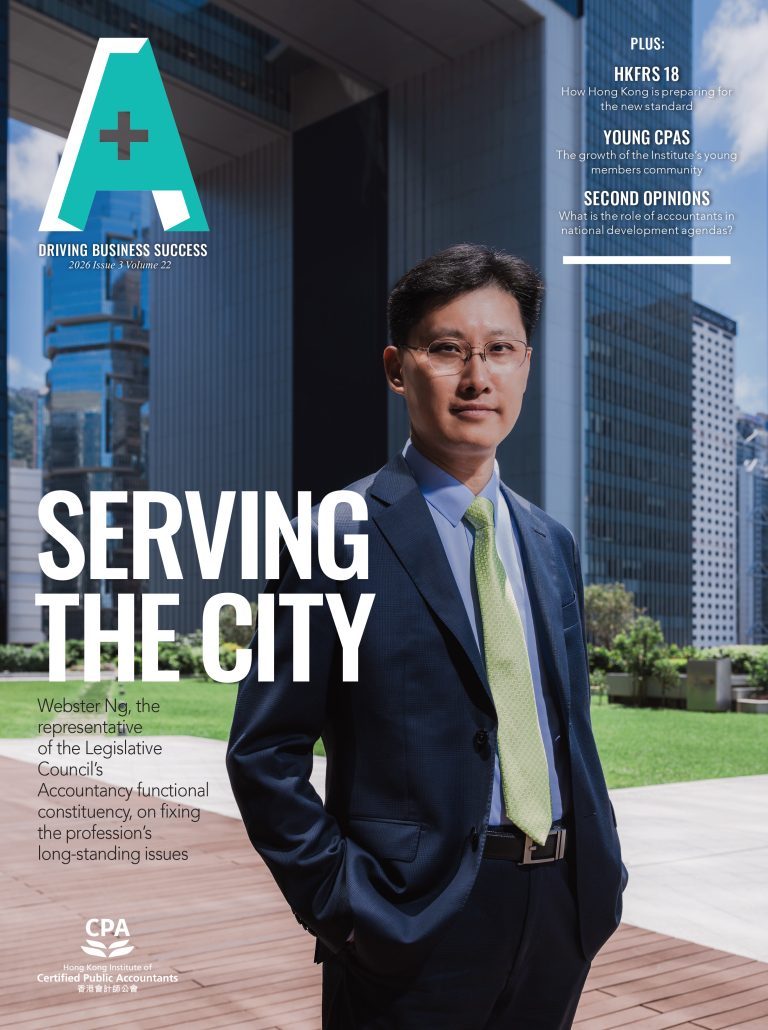

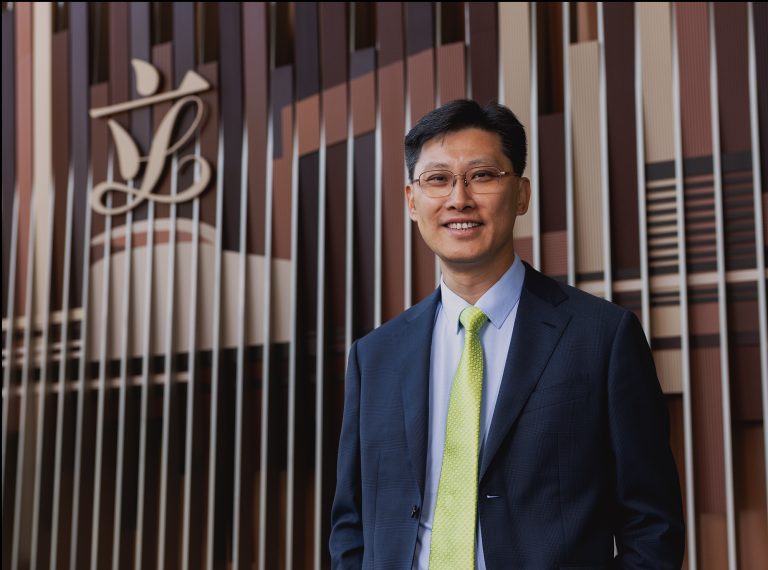



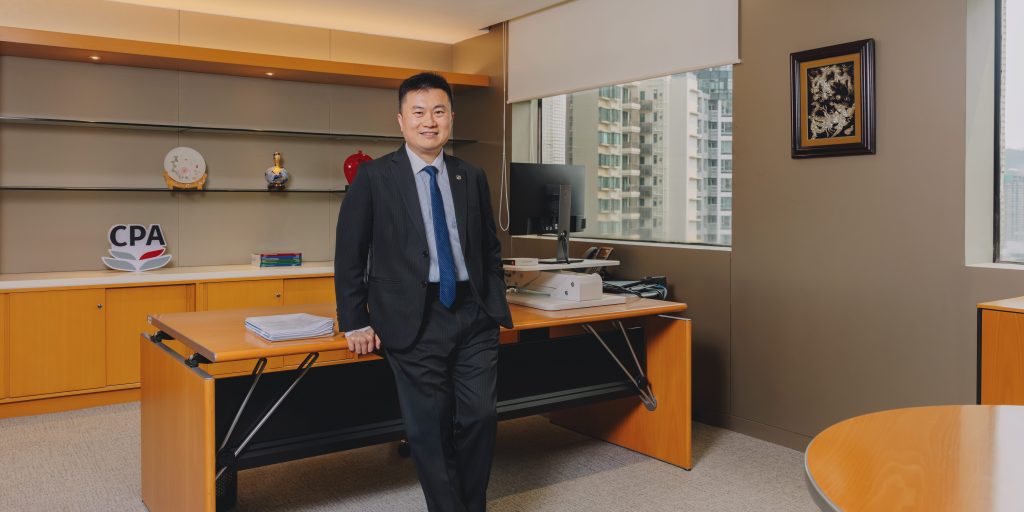
With three weeks to go before he officially becomes the Chief Executive and Registrar of the Hong Kong Institute of CPAs, Arthur Lee is having conversations with as many people as possible. “It goes back to the old ways of doing audit: Understand the organization first,” says Lee, sitting with A Plus before his effective start date of 22 April. “I need to get everybody’s perspective. It will take some time, but I’ll try to talk to the whole team at the Institute.” All that listening will come in handy as the Institute enters a new era.
Coming from a career shaped by management roles in listed companies and a state-owned enterprise – his most recent job was as director of finance and risk management at CLPe – Lee will oversee the Institute’s 170-plus staff, and guide the development and implementation of its strategic plans.
But in the current rapidly evolving landscape, driven primarily by the widespread integration of artificial intelligence (AI), Lee recognizes that there will be challenges ahead, particularly as the Institute looks to continue securing the profession’s growth and relevance.
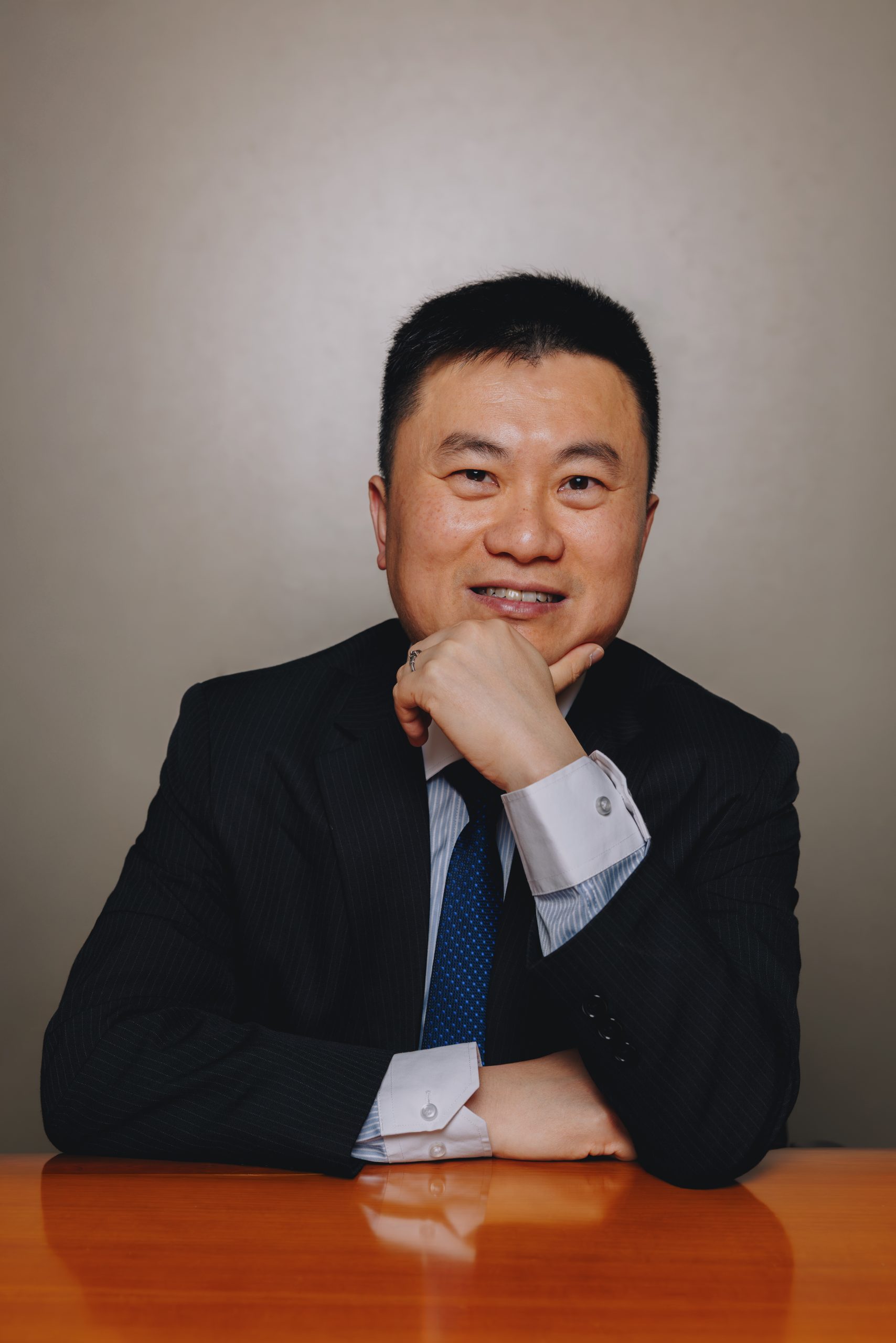
“There’s a lot going on in the world today. Leading the Institute at this time will be a challenge and an exciting opportunity. I am eager to share my experience, my expertise, and work with our members to shift the accounting profession from its traditional focus on the past to a forward-looking, strategic role where historical insights powerfully inform future decisions,” he says. “Of course, AI will play a pivotal role in this evolution. While I do not yet have a detailed roadmap, I am fully committed to working hand-in-hand with our members. Together we will equip members to thrive, adapt with confidence and advance as stronger, and highly strategic, professionals in this rapidly evolving landscape.”
Lee served as the Chairman of the ACCA Hong Kong from 2015 to 2016, and was elected a member of the ACCA Global Council from 2016 to 2022. He is also a Hong Kong Accounting Advisor appointed by the Ministry of Finance of the PRC, Treasurer and Adjunct Professor at the Hong Kong Polytechnic University, and Honorary Fellow of Hong Kong Baptist University. In 2023, Lee was awarded the Medal of Honour by the HKSAR Government in recognition of his community service, particularly in the accounting profession.
A trusted profession
Having grasped the Institute’s Strategic Plan 2026, organized prior to his appointment around three themes: Building Trust, Nurturing Talent, and Driving Development and Transformation, Lee believes the Institute is moving in the right direction. “But perhaps I can help do some fine-tuning to make it move faster, or even better,” he says.
His broader ambition is to make accounting “the profession of choice for our next generation and ensure the general public views us as a trusted professional,” Lee says. “In some countries, people vote accounting as the second most respectful and trustworthy profession in society. I hope to achieve an even better score.”
He wants the public to think of accountants the way he thinks of himself. “I tell my supervisor: ‘I’m your trusted business partner.’ I want people to look at accountants as a trusted partner to everyone doing business,” Lee says.
“In some countries, people vote accounting as the second most respectful and trustworthy profession in society. I hope to achieve an even better score.”
Recent scandals have dented public trust in the profession, and he acknowledges the challenge. Lee believes the Institute can build trust meaningfully by enhancing the Institute’s continuing professional development (CPD) courses, arranging better networking events and nurturing a family ethos within the community. “During my interview, one of the Council members asked me what keeps me awake at night,” he says. “What truly concerns me is the possibility that any member might inadvertently misstep and face serious consequences. I see the membership of the Institute as one extended family, and my sincere hope is that each of us succeeds and thrives,” Lee says. “CPD plays a vital role in this, but I envision it going beyond simply conveying rules and procedures.”
Through well-designed programmes, Lee hopes to ensure members not only understand the regulations thoroughly but also develop the practical judgement needed to make sound decisions across diverse scenarios – always in full compliance with ethical and professional standards.
“More importantly, I hope we can cultivate a deeper appreciation for the ‘why’ behind these rules,” he continues. “When members truly internalize the purpose and values that underpin our responsibilities, compliance becomes not merely an obligation, but a natural expression of professional integrity,” Lee says.
Lee also emphasizes the importance of community. “In parallel, I believe we can create an environment that encourages members to connect, support and learn from one another,” he continues. “Such collegiality will in time, help our profession grow wiser, more enlightened and even stronger in serving the public interest.”
He sees himself drawing from his own sustainability leadership experience as the Institute continues to focus on integrity in reporting and assurance practices. “We have actively supported the Accounting and Financial Reporting Council’s recent consultation on the proposed regulatory framework for sustainability assurance in Hong Kong. Moving forward, we will continue to prioritize education and are considering the development of targeted design programmes to help members bridge the gap between auditing financial statements and provision of high-quality ESG assurance.”
Lee draws on years of experience in building the financial case for renewable energy to investors, and he applies the same framing as he looks to support the sustainable development of both the Institute and the wider profession. “Sustainability should not be viewed merely through the lens of philanthropy or social responsibilities. It represents a powerful strategic opportunity for organizations. By embracing sustainable practices, businesses can strengthen their financial position, lower their cost of capital and secure resilient, long-term growth. My aim is to help organizations adopt a more forward-looking perspective, one that integrates sustainability as a core driver of enduring success and value creation,” he says.
On AI, he is resolutely optimistic. “When the car was invented, it rendered certain roles obsolete but gave rise to entirely new industries, from expanded personal mobility and logistics to tourism, urban development and countless innovations we now take for granted,” says Lee. “With AI, I believe some old jobs will be phased out, but many more will be created – more than we’ve ever seen before. I’m very optimistic about AI’s potential impact on the profession and its ability to empower professionals to deliver greater strategic value.”
The accidental accountant
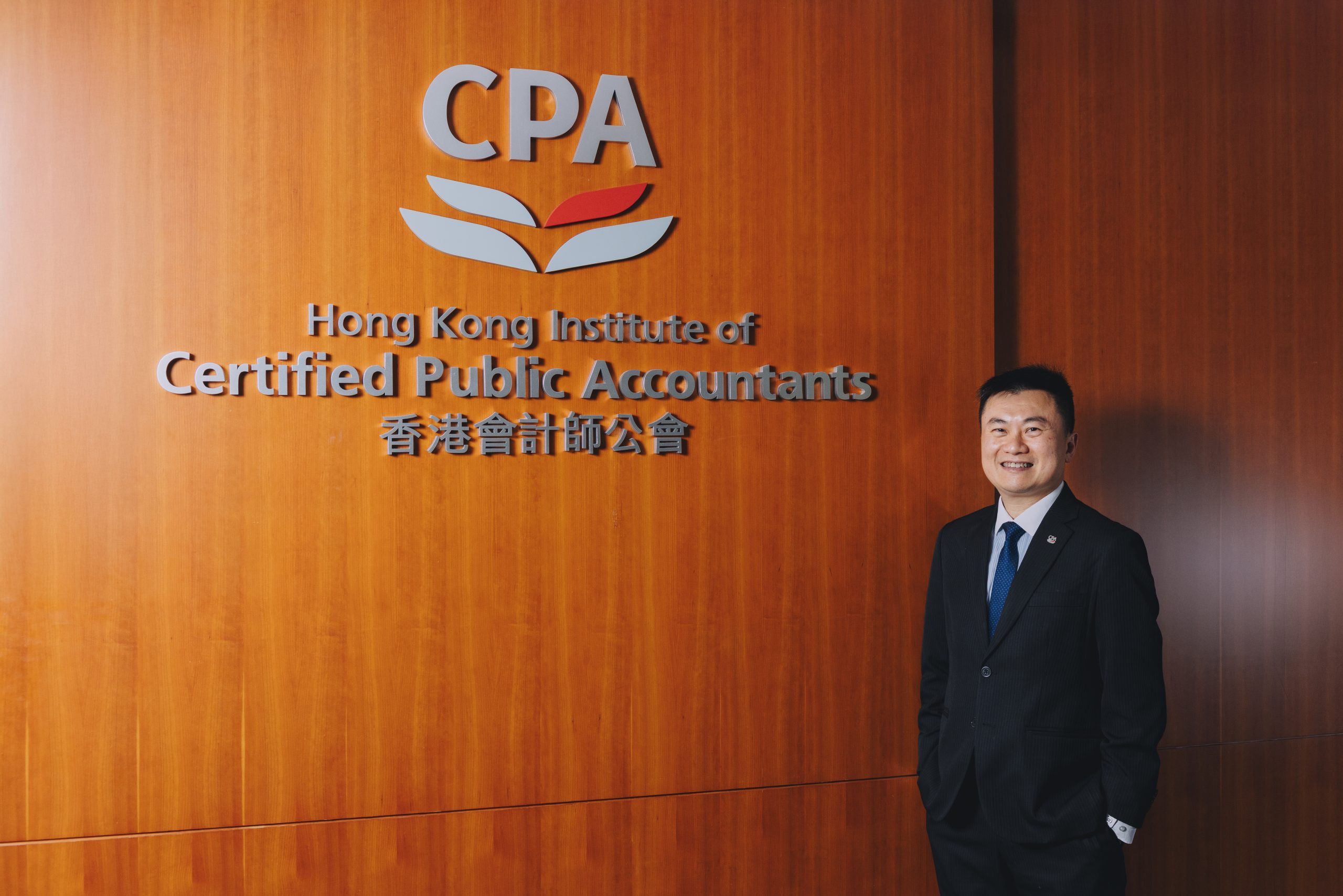
Born in Beijing in 1972 to Chinese parents who had repatriated from Singapore and Indonesia, Lee arrived in Hong Kong at the age of two. He grew up in the city, studying from kindergarten through to university at the Chinese University of Hong Kong, where he studied information engineering largely because many of his peers were doing the same, he says candidly.
After graduating with no clear plan, he applied to work for Arthur Andersen’s business consulting division after attending a career talk by the firm. Instead, he found himself being interviewed by the audit team and offered a role. “I didn’t know why I was being interviewed by the audit division, but I accepted the offer, believing that perhaps this profession was right for me,” Lee recalls. He went on to pass all required exams with top scores, which filled him with confidence.
Years later, as he prepared to leave the firm, he asked to see his recruitment file. The interviewer’s note stunned him: “Can give this gentleman a chance because we need the headcount.”
“I had always believed I was chosen because I had the attributes of a good auditor,” says Lee with a laugh. “It taught me two lessons. If you truly believe you can do something, then you can really do it. Second, you have to be humble. You can achieve a lot of things just by being at the right place, at the right time. Always believe in something and, at the same time, stay humble. It sounds contradictory, but it’s a balance.”
Those audit years brought more lessons. Lee describes himself as an introvert, formed by a self-reliant nature that he says stems from his upbringing. “My parents always instilled that we have to work hard and don’t bother people. Don’t be a troublemaker,” he says. At the now-defunct firm, the limits of self-reliance were exposed. “I committed many careless mistakes,” he admits. “I always had the impression that if I ask people questions, they would look at me as if I’m stupid. But the reality is, it is worse if you don’t ask.”
The importance of teamwork became clear to Lee. “I think a lot of people like myself who are more academic have the same issue. We like to accomplish things all by ourselves,” he says. “But that audit period taught me that I could rely on a team, and by working with a team, we can achieve great things. I cannot do everything myself.”
Career in energy
From Arthur Andersen, Lee followed a former client, United States-listed power generation company Mirant, into the commercial world. The controller there had observed his diligence during the audit relationship and offered him a role. He considers his boss at Mirant an important mentor, who taught him the politics of large multinationals, even something as granular as who to CC on an email, who never to CC. “I think it’s my biggest luck to work for him for those few years,” says Lee. “He was a very kind person, and coached me on the meaning behind daily work, like accounting entries, but also how to work well in management. What to say, what not to say.”
Three years and eight months later, the Enron crisis shuttered Mirant’s Asia-Pacific operations and Lee left. He joined the finance team at i-CABLE on 1 April 2003, a day he remembers vividly. It was the day Cantopop and film star Leslie Cheung passed away. “It was a very sad day to kick off the new job,” he says, adding that it was also the peak of SARs in Hong Kong.
Despite the bleak setting, the role broadened Lee’s capabilities. “I was able to apply some of my information engineering knowledge, so that came back. I also applied my audit knowledge in a listed company environment,” he says.
“But my heart was still with the energy sector,” Lee adds. He moved to Meiya Power, and helped to facilitate Meiya’s sale to China General Nuclear Power Group (CGN), in 2010.
“A leader’s primary role is to support and empower the team. That is why I encourage colleagues to approach tasks in ways that best suit their strength and judgement.”
Lee stayed with the new entity, CGN New Energy, for 14 years, a period that included leading investor relations for the company’s Hong Kong IPO in 2014. He had first been put on strategy work, during which he developed a five-year plan centred on transitioning the business towards renewables. “At that time, I enrolled in a master’s degree on corporate governance at the Hong Kong Polytechnic University. We planned for the IPO so I wanted to equip myself with knowledge on governance issues for listed companies,” Lee says.
When the IPO came, he was put in charge of investor relations, persuading cornerstone investors including a prominent Hong Kong-based investment fund widely regarded as a market leader at the time. “We recognized that securing the support of such a respected fund would signal strong confidence to the market and encourage others to follow,” he recalls. The key selling point was the company’s strategic transition – a coal-and-gas power generator diversifying its energy generation away from fossil fuels to curb environmental pollution. “It wasn’t just me; everybody believed that renewables were the future,” says Lee.
CGN New Energy (named CGN Meiya in 2014) secured commitments worth US$200 million from five cornerstone investors, including China Southern Power Grid, Value Partners, Hengjian Investment, Chow Tai Fook and Cinda HK. Lee personally negotiated most of these deals. The experience sharpened his ability to communicate strategically. “It was a pretty exciting process. You have to communicate the big picture of the future so that investors understand the direction.”
Lee then became company secretary at CGN for 10 years, before moving on to what he originally assumed would be the last job of his career – CLPe, the business unit under CLP specializing in energy and infrastructure solutions. “It’s focused on providing sustainability products, which is aligned with my vision on sustainability,” he says.
Lee oversaw the financial analysis for projects ranging from electric vehicle charging infrastructure to liquefied natural gas bunkering for large vessels. The work brought him back to financial modelling after years in strategy and compliance. “After saying goodbye to financial work for more than 10 years, I came back to financials again. My supervisor expected me to give him an opinion on key business decisions before it got to him. This trained me up to take on a more decision-making role.”
Lee says the energy years deepened his conviction about climate change. “I still remember back in university in the 1990s, I wore long sleeves in October. I compare that with today – in October, we’re always wearing short sleeves,” he says. “I just think we have to do something. As a father, I want this to be a better place for our next generation to live in.”
Making joy a priority
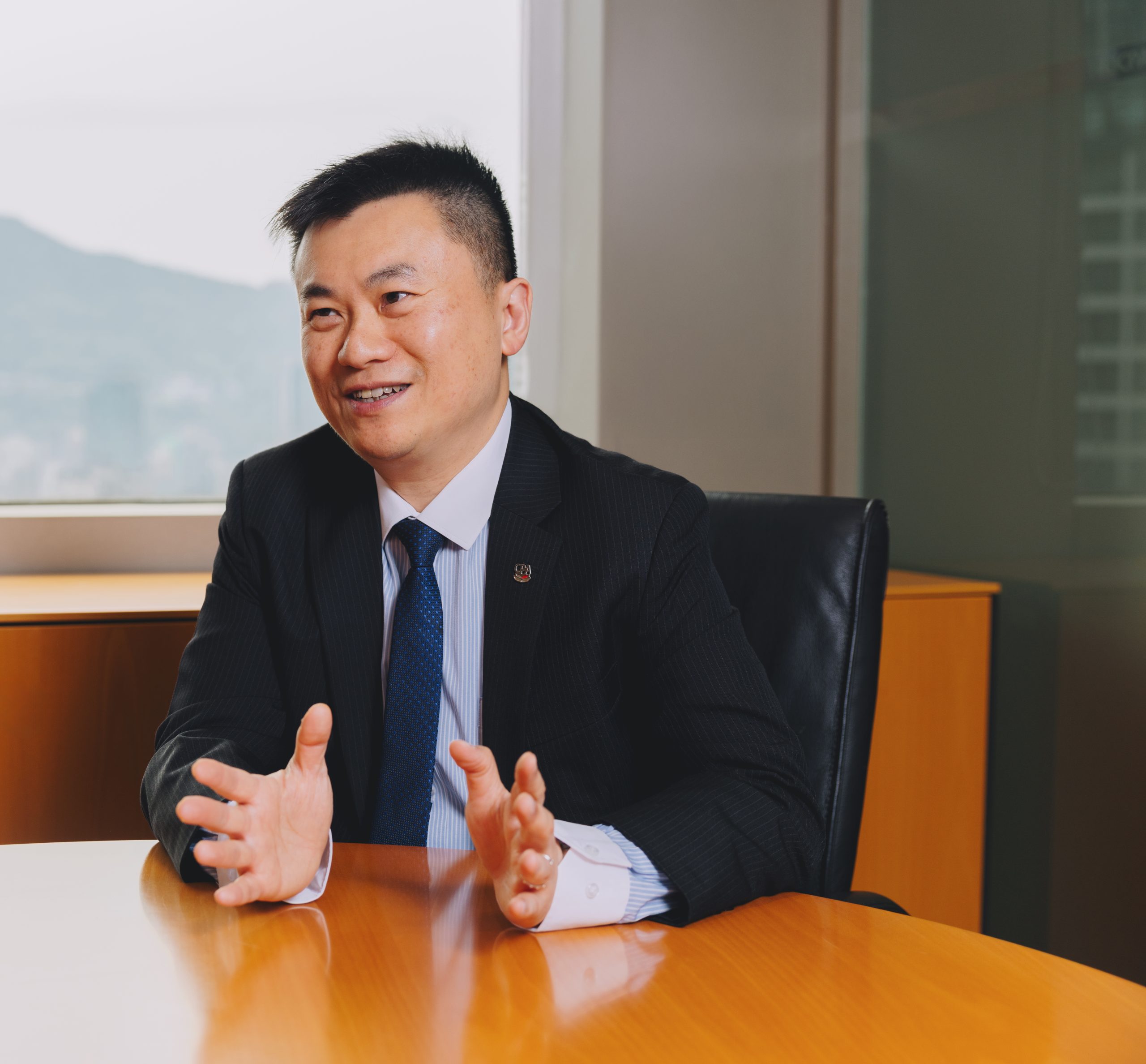
Lee arrives at the Institute with a management philosophy he has refined over many years and distilled into an acronym: HAPPY. “H is for high performance; A for achieving big things together; P for professional excellence; P for handling people with care; and Y for yielding big things with joy,” he explains. “For me, creating a Happy team is not about pursuing fun for its own sake or avoiding serious work. It is about fostering an environment where we accomplish meaningful goals as a team and derive the deepest satisfaction from those shared achievements. Making joy a priority means recognizing that the greatest fulfilment comes from delivering excellence together and seeing the positive impact of collective efforts.”
The framework was first inspired by the audit partner he worked with during his early days at Arthur Andersen, and was further reinforced by his reading of Joy at Work by Dennis Bakke, the founder of global energy company AES. “As someone with a background in energy, the book resonated deeply with me. It reinforced my belief that a leader’s primary role is to support and empower the team. That is why I encourage colleagues to approach tasks in ways that best suit their strength and judgement. Of course, when guidance is needed, we discuss openly and constructively.”
His management style also translates in an open-door approach, with a lot of communication. At CLPe, Lee says, the open-plan office naturally encouraged frequent dialogue and spontaneous exchanges. “I want the team to feel genuinely happy in their work. They can have real fulfilment and purpose in what they do, rather than viewing their role merely as a means to earn a salary. If it’s the case, then I would consider myself to have fallen short as a leader.”
Leading by example
Running used to be Lee’s main release until a race in Taipei ended with him waking up in an ambulance, being told by hospital staff that “he could die at any moment.” He suffered a heart attack mid-run. “When I woke up, I wanted to be sent back so I could finish the race,” he laughs. Doctors fitted a stent and he has not run competitively since.
When he’s not working, Lee gives his mind a break through cinema, and embraces the dad-life. He shares how his son’s early struggles at university while studying law in Beijing prompted him to sit the PRC Law exams himself. He ended up passing. “My boss at Mirant told me: lead by example, and this has also become one of my mottos,” he says. “If I ask my son to work hard, and I’m not a hard worker myself, then I can’t motivate him. So I tried it myself, to face what he’s facing, and then share this experience with him.”
His daughter, meanwhile, has taught him patience. “I honestly didn’t always have patience when dealing with people in the old days. If people don’t understand me the first time, I don’t like to repeat myself,” he says. “But given that she has special educational needs, she needs me to be more patient and to understand that there are people out there with different backgrounds or histories. Both of my kids have made me a better person.”
Lee is currently doing a Master of Laws at City University of Hong Kong, with subjects including arbitration law, sports and entertainment law, and more. He expects to put it on hold once the new role starts. “To me, learning is finding out the truth about the world,” he says. “Last week, we did a presentation on defamation and breach of confidentiality, and all my team members are probably even younger than my kids. The good thing is that we communicate well with each other.”
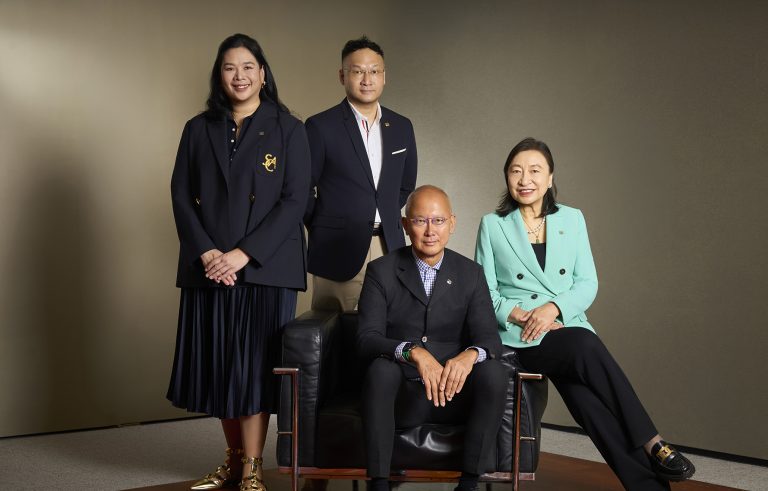
That same spirit of continuous enhancement will now be directed towards the Institute’s over 47,000 members, each one, in Lee’s vision, a valued part of an extended family he is honoured to serve. “This is a community I am fully committed to supporting, empowering and helping to thrive in the years ahead,” he says.
In February, The Institute shared its Strategic Plan 2026, building on the 2025 framework with clearer priorities and sharper execution across all 12 focus areas. The Council concluded that the themes of Building Trust, Nurturing Talent, and Driving Development and Transformation remain appropriate and relevant. As the Chief Executive and Registrar, Arthur Lee will guide the implementation of this strategy.