







In the early 2010s, there was something noticeably different about the accounting profession in Hong Kong. The sheer growth of the Hong Kong Institute of CPAs – it passed the 30,000-member mark in 2010 – resulted in greater diversity among members, with the demographic of accounting professionals getting younger.
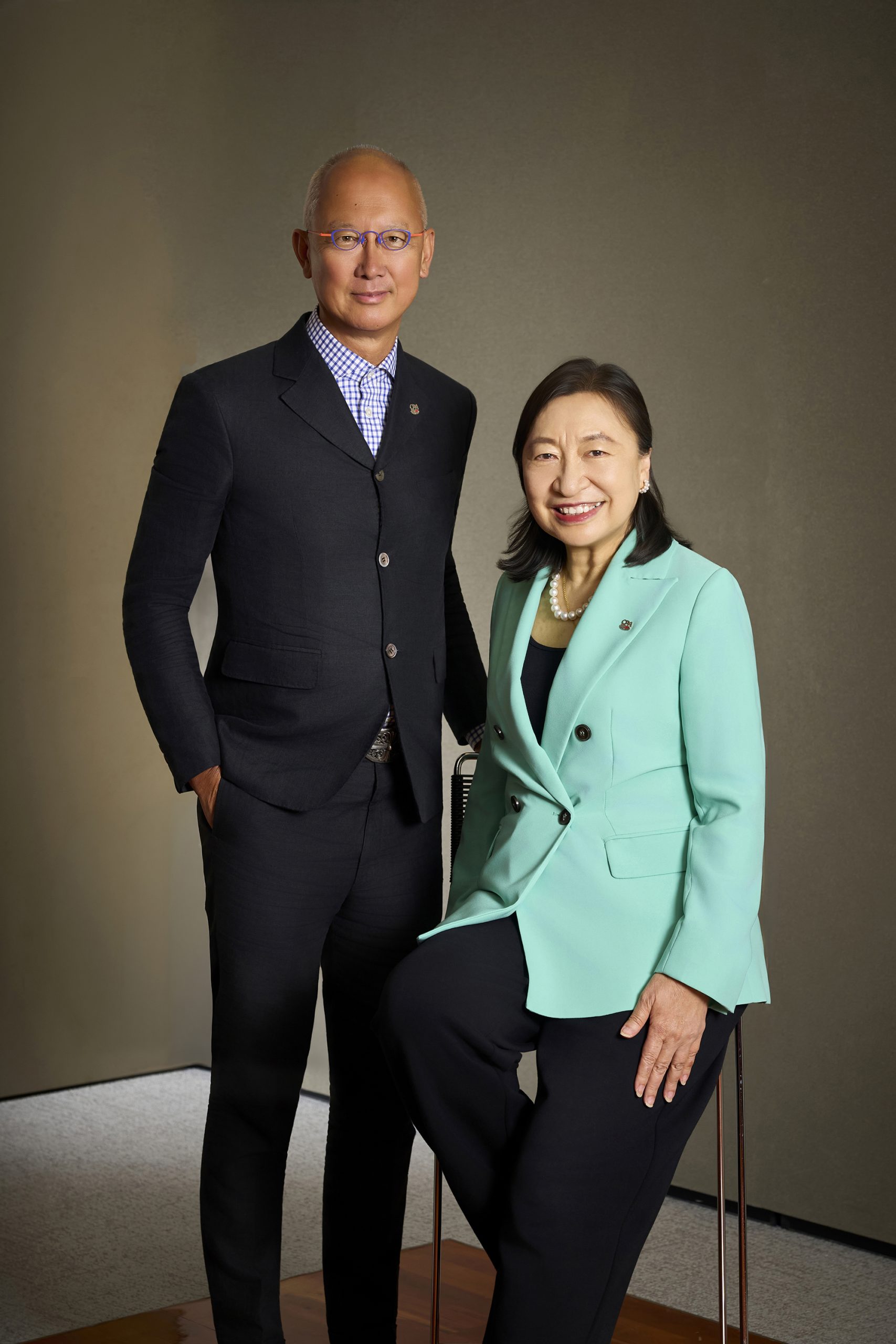
This was clear to both Philip Tsai and Susanna Chiu long before he became Institute President and she Vice President in 2011. “Over my years as a Council member, I saw that the proportion of young members had grown tremendously. And when I was President, I noticed that more than 25 percent of our members were below the age of 40,” recalls Tsai.
This generation of young CPAs were, in some cases, navigating the most formative stretch of their careers without adequate support. Many were working in smaller firms or in industry roles where formal mentorships did not exist. Others were recent qualifiers, with little sense yet of how to get to where they wanted to be in their careers.
“With that demographic change, I thought that we should spend more effort in developing younger members,” says Tsai. “I was very fortunate that when I started my career with Deloitte, I had good mentors and counsellors helping me develop myself. But what about my fellow members in smaller firms, or those working in business? They might not have had the robust counselling and development programme that I had enjoyed.”
Chiu highlights that at each stage of a member’s professional life, the needs are fundamentally different, and applying the same services to all was not the best use of resources, and left real gaps unfilled. “We had a big number of members between 25 and 35, just qualified, going through their career development, wanting to expand,” she recalls. “Their needs were very different from the 35 and above, and also different from the 60 and onwards.”
With that nagging observation came the idea of establishing the “25.35 Group” within the Institute, a group for young members. The name chosen for the group was deliberate. “Once you finish college at around age 21 or 22 and start taking exams, roughly three years later, around age 25, you become qualified and join the Institute,” Tsai explains. “The next 10 years are going to be pivotal in your development, both personally and professionally. In firms like the ones I have worked in, one typically makes partner around 35. If one hasn’t achieved that by then, it becomes much more difficult.”
The challenge then was to win over the Council, and get buy-in for an initiative that had never been done before. Rather than making the case himself, Tsai, as President, invited one of the young members to present directly to the Council.
“We were asking a young member in his mid-20s to propose a case to a group of around 20, very experienced, professional accountants.”
“We were asking a young member in his mid-20s to propose a case to a group of around 20, very experienced, professional accountants and leaders in their own rights. But I thought that instead of myself or an executive doing it, it would be more convincing if one of the young members presented the case to the Council,” explains Tsai. That decision paid off. The Council gave the initiative its support, and the 25.35 Core Group was born.
The core group and leadership panel years
With Council backing secured, the Institute needed someone to turn the idea into a living community. Gary Poon, then in his early 30s and already a seasoned participant in the Institute’s committees and also the youngest Council member of the Institute at the time, took on the role of Convenor of the 25.35 Core Group and later Convenor of Young Members Leadership Panel. He came to the role tired of hearing criticisms that the Institute was merely an association of older and established professionals.
“In my opinion, the HKICPA has been a professional organization where seasoned and successful members groom and nurture young members like me in its activities, committees and sub-committees,” he says. “It was imperative for young members to be more engaged and involved, to foster a greater sense of belonging and empowerment.”
Before the core group could set its agenda, Poon and the Institute’s leadership team – including President Tsai, Vice-Presidents Chiu and Keith Pogson, and Chief Executive and Registrar Winnie Cheung – convened roundtable sessions to listen first. The gatherings brought together young members from across the profession to identify their needs and concerns. The topics discussed, Poon recalls, were professional and career development, leisure and recreation, Chinese Mainland affairs, cross-profession networking, social media, mentorship, and the growing presence of accountants in business and young female members in the profession.
“Most importantly, we recruited about 15 young members to serve in our core group from these roundtables and also the network of the Institute,” says Poon.
From those conversations, Poon and the group built a structure. Drawing on the model of the Institute’s formal committees, they established a series of sub-groups, each focused on a distinct area: professional and career development; leisure and recreation; Chinese Mainland affairs; cross-profession networking; social media; and mentorship. It was a framework that closely mirrors the breadth of programming the Young Members Committee (YMC) offers to this day.
One of the subtler challenges in those early days, according to Chiu, was that events needed to fit the actual lives of young professionals, not just the schedules of their more senior colleagues. She recalls proposing that one of the group’s inaugural events be held at 9 p.m., and the concern this raised among some senior Council members at the time. “They said, ‘9 o’clock? It’s too late, everybody will be sleeping soon!’” Chiu laughs.
“We let the young members run what they want, what they need, and that even the timing has to fit into their lifestyle.”
She held firm, and with backing from one of the young convenors, the event went ahead at a bar in Lan Kwai Fong, and it was packed. “It was so well-attended, and the feedback was good,” she says. “This is the starting of 25.35 Core Group, that we let the young members run what they want, what they need, and that even the timing has to fit into their lifestyle.”
The activities that followed were ambitious in both volume and variety, with events running on a monthly basis across all the sub-groups’ areas. From 2012, the group began to scale up, launching flagship events including Career Conferences and large joint professional conferences and networking gatherings that brought together young members from around 10 different professions. “Moreover, more young members were nominated and selected to serve in our different committees of the HKICPA to achieve greater young member representation during our core group and leadership panel years,” Poon recalls.
For Poon, one of the most distinctive early initiatives was the introduction of Chinese Mainland National Heritage Classes and Tours, a programme that required careful coordination and communication with the Liaison Office of the Central People’s Government in Hong Kong. “Many young members longed for the opportunities to learn more about the economic and cultural developments in the many different provinces and municipalities of the People’s Republic of China,” he explains.
Perhaps the most far-reaching of the core group’s initiatives was the earliest work on mentorship. Though the Mentorship Programme would not be formally launched until 2015, a working group on mentorship was formed in 2012 to develop the framework of the programme, looking at mentorship programmes from different organizations and academic bodies as reference. In 2014, the Mentorship Programme Advisory Group was set up, comprising stakeholders representing major companies, small and medium practices, professional accountants in business, and young members. Their views and feedback directly shaped the programme that launched soon after.
A more formal committee status
By 2015, what had begun as the core group had demonstrated enough importance to merit formalization. The Institute’s Council officially named the group Young Members Committee, elevating its status and providing it with a more structured mandate.
Jennifer Cheung was the YMC’s inaugural Chairman. She was, at the time, one of very few young members serving on the Council, and she saw the new chairmanship as a signal that the profession was serious about amplifying the voices of its younger generation. “It solidified that young members focus,” she reflects. “It meant that the things the group had been pushing, we were able to really push them through quite quickly and get them going.”
“We were all there to drive things that we knew as members, calling the shots ourselves.”
On a personal level, as her first chairmanship role, it was also a steep learning curve. She points out that unlike a conventional leadership role in a corporate environment, the YMC chairmanship came without a fixed hierarchy or a predetermined agenda. “We don’t have an organization where your top management dictates a direction,” Cheung explains. “We were all there to drive things that we knew as members, calling the shots ourselves. As chairman, it was a very good learning process, because you needed to mediate different stakeholders, motivate people who all had their own ideas, and get them working together.” That experience, she notes, proved invaluable for the public service roles she went on to take on in subsequent years.
Launching mentorship
During Cheung’s two years as chairman, the Institute’s Mentorship Programme was officially launched, a move she describes as addressing an obvious gap. “It was very clear that mentorship was the missing part because the Institute as a professional body should get members of this profession together. We also knew, structurally, many of the members who were in professional accounting firms would consider going into business, so it was very clear that there was a need,” she says.
It also turned out to benefit mentors as much as mentees. “Through the time I was involved, many of the mentors also found it very beneficial to have been on these programmes. Not only was it a way to give back, they also found it a way to connect with the younger generation. So, we also tested waters with a reverse mentoring scheme as well,” says Cheung. The Mentorship Programme remains the YMC’s flagship initiative, having paired hundreds of mentor-mentee couples across the profession since its launch.
Cheung also took deliberate steps to ensure the committee would outlast her own tenure. She introduced a formal structure of working groups and helpers. “In terms of having enough resources, obviously, we had a secretariat to help us, but in order to get things going, we really needed volunteer efforts from members for organizing events. It was important to have a system to get people involved and be interested,” says Cheung.
She also made succession planning a priority from the outset. “The time that we’re volunteering at the Institute are typically the golden years of our youth and careers,” she reflects. “As a woman, those are also often the years you enter into motherhood and other commitments. You need to make sure there is a pipeline of people ready to take over.”
Cheung was also determined to broaden the YMC’s reach into the wider professional community. During her chairmanship, she represented the accounting cohort in a cross-professional coalition of young members from Hong Kong’s various professional bodies, and organized events that allowed young CPAs to build relationships with lawyers, engineers and other professionals.
“One of the key things about Hong Kong as an international financial centre is that we have so many professional services available, as a platform and springboard to Chinese Mainland,” she says. “It’s important for us to understand the other professions and have the ability to network with them, to understand how to make our city an even better place, and we did that through engagement.”
The community today
In 2014, the Institute revised its definition of “young member” and set the age limit of young members at 40. This was done to be more in line with the age limit adopted by different organizations, including chamber of commerces. This age limit also applied to group members. Today, young members account for around 40 percent of the Institute’s total membership, making their professional development a strategic priority for the profession.
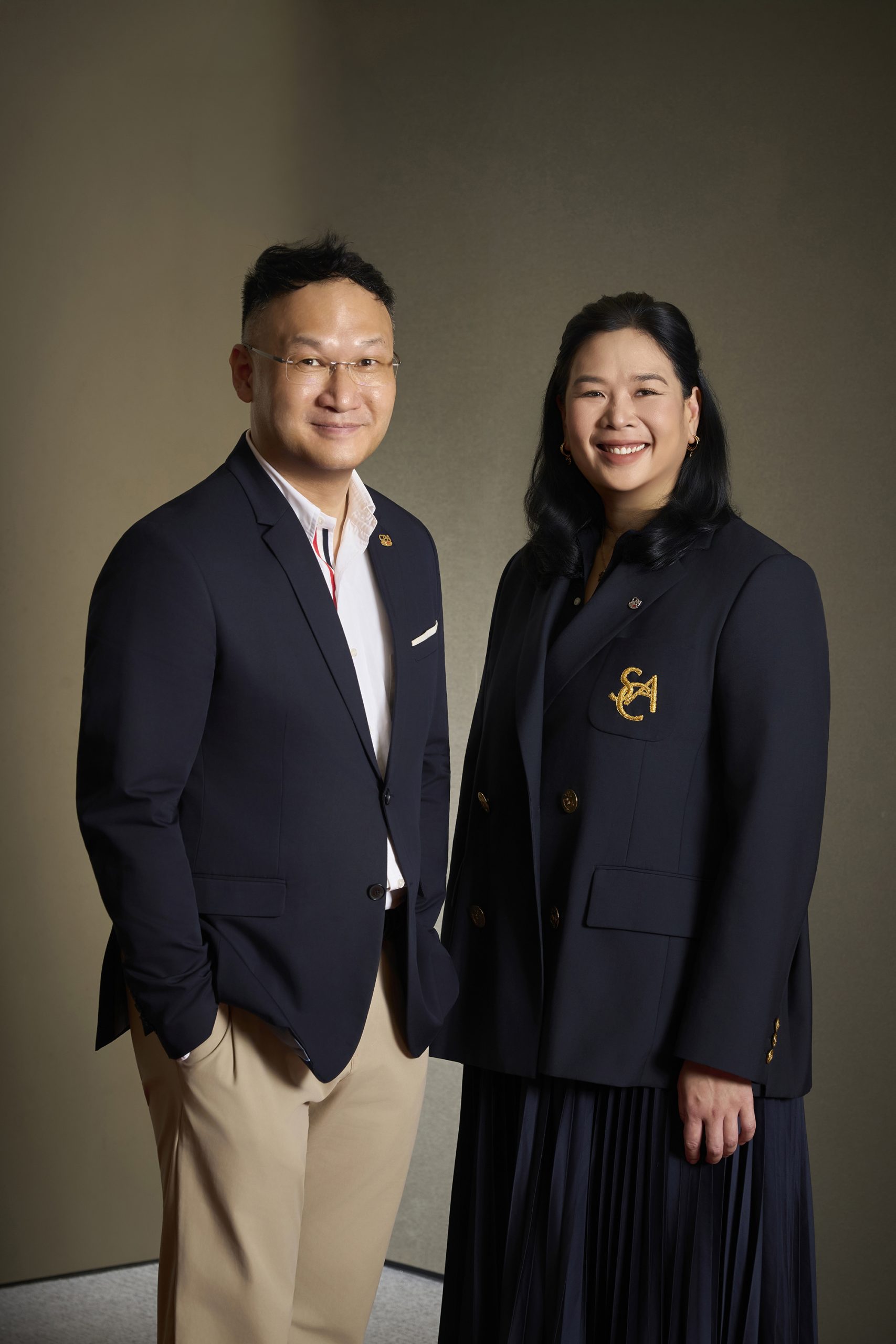
Fifteen years on from that first Council presentation, the Institute’s group for young members has grown into one of the Institute’s most active communities. The milestone was marked on 5 May when the Institute hosted a Young Members Homecoming Night, a gathering that brought together past and current members of the community. In his address that evening, Institute President Stephen Law noted that the world had changed since 2011, yet the founding purpose of the committee never did. “Youth is always our future,” he said. “The accounting profession can continue to develop thanks to the efforts of so many young members.”
Indeed, for Chiu, the anniversary is a moment to urge today’s young CPAs to act and consider playing an active role in the development of the profession. “By enhancing the branding of the CPA and helping the accounting profession grow stronger, you are actually helping yourself. The better the Institute, the profession, the better your career prospects will be,” she says.
She is proud, Chiu adds, that neither she or Tsai needed to stay on to keep the group going. “We set it up, we held their hands, and now you can see them growing very beautifully. Each year, there is a very qualified successor to lead. That is what success looks like.”
Tsai agrees, saying: “I wouldn’t take any credit. It’s been a continuous effort by many fellow professionals that made it a success.”
“Our accounting profession in Hong Kong has been fortunate to have passionate young members to participate and contribute over the years.”
For Poon, the anniversary is a moment for optimism. “Time flies. It was fruitful and meaningful to lead the Core Group and Leadership Panel between 2011 and 2014,” he says. “Our accounting profession in Hong Kong has been fortunate to have passionate young members to participate and contribute over the years. I wish our different generations of accountants to go from strength to strength in the future.”
For the past 15 years, young members have been able to rely on the community for connection. What started as the efforts of the 25.35 Core Group’s first members, has grown into a network that has held more than 200 events, and engaged more than 40,000 young members.
It has also become a platform that inspires. As Cheung puts it, the community remains a crucial resource that every young CPA should be leveraging, particularly as the business environment today requires relentless adaptability. “The membership is actually a bit of a gold mine,” she says. “There are so many members across the Institute who are willing to give back. Young members should be able to leverage all of that as they navigate their careers.”
40,000+
Since the launch of the Institute’s 25.35 Core Group in 2011, the young members community has grown into a network that has held more than 200 events, and engaged more than 40,000 young members.