




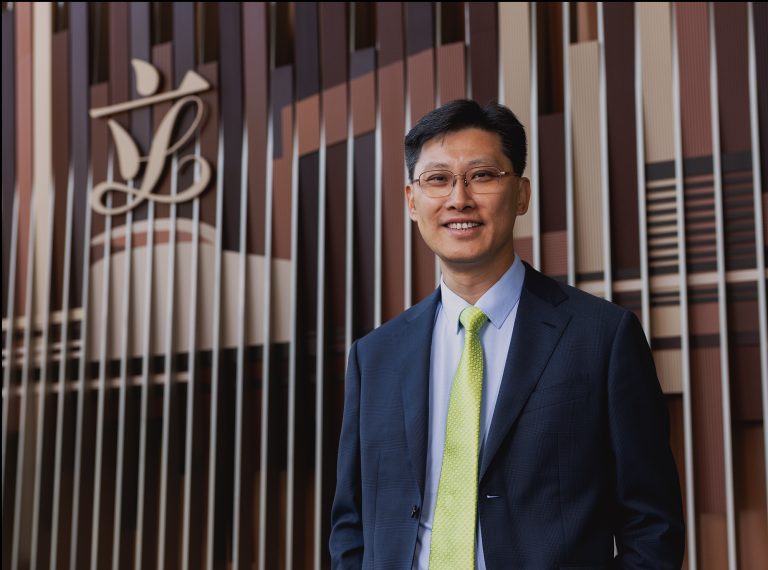






Mandy Ng, Chief Business Transformation Officer at AS Watson Group, and an Institute member
Many business transformations fail for a simple reason: they over-index on technology. Too often, organizations treat transformation as a systems upgrade, assuming that new platforms alone will create new outcomes. In reality, technology is only one enabler. Sustainable transformation happens when a business rewires how it makes decisions, how work gets done, and how people adapt and lead through change.
At AS Watson Group, that is a reality we see every day. We operate a complex O+O (Offline plus Online) retail ecosystem spanning more than 17,000 stores across 31 markets, with over 120 e-commerce platforms and around 130,000 people. In an environment of this scale, transformation cannot sit within a single function, nor can it be run as a collection of disconnected initiatives. It has to be anchored at the top, with strategic clarity, cross-functional alignment, and execution discipline. That is why the Group established the Business Transformation Office. Beyond being a functional organizational unit, it communicates a clear signal that transformation is being led as a business priority, with senior leadership sponsorship, enterprise accountability, and a focus on long-term value creation.
While technology is one of the four pillars, success is disproportionately driven by the other three. First, data must be the single source of truth. In a global business, fragmented data leads to fragmented decisions. Without trusted data, leaders cannot allocate resources confidently, measure performance consistently, or respond quickly to customer and market shifts. Transformation becomes far more effective when data is not treated as a reporting output, but as the backbone of decision-making.
“The strongest transformations are powered by data, enabled by better processes,
embraced by people, and accelerated by technology.”
Second, processes must be redesigned, not merely digitized. Many organizations automate existing habits and call it transformation. That is not enough. Real progress comes from rethinking workflows so they are faster, simpler, and better suited to a more connected and customer-centric business. For boards and finance leaders, this is where transformation becomes tangible, through greater agility, stronger control, better productivity, and lower execution risk.
Third, people ultimately determine whether change sticks. Transformation succeeds when employees understand the direction, trust the intent, and feel equipped to contribute. A change-ready culture is not built through messaging alone. It is shaped through leadership consistency, capability building, and visible commitment from the top.
Technology still matters, of course. But it is the amplifier, not the foundation. The strongest transformations are powered by data, enabled by better processes, embraced by people, and accelerated by technology. That is why transformation should never be viewed as a one-off digital programme. It is a continuous journey of cultural and operational refinement, and it must be led that way, from the top.

Bonnie Chan, Associate Partner, GenAI APAC at IBM, and an Institute member
A successful business transformation demands a holistic reinvention of how an organization operates, creates value, and competes. I see five key success factors.
A clear, value-driven, and ambitious vision – Transformation begins with a vision that is bold, realistic, and anchored in measurable business outcomes. Organizations must identify the critical value pools, such as revenue growth, cost efficiency, customer experience, operational resilience, or risk reduction, and use these as the foundation for the transformation roadmap. Leadership alignment is essential. When the C-suite and business-unit leaders share the same priorities, execution accelerates, decisions become clearer, and teams gain the confidence to act quickly.
A modern digital foundation – The most successful transformations invest early in building a strong digital foundation. This starts with unified, well-governed data that eliminates silos and ensures accuracy, accessibility, and trust. Artificial intelligence can then be confidently integrated to improve decision-making, automate workflows, and elevate human performance. Hybrid cloud architecture provides the flexibility, security, and scalability needed to modernize core systems while enabling innovation at speed. Together, these components form the digital backbone required for scaled, enterprise-wide reinvention.
“Transformation succeeds faster and more sustainably when organizations leverage strong partnerships.”
An operating model built for speed and collaboration – High-performing organizations redesign their operating models around cross-functional teams, shared KPIs, end-to-end ownership, and simplified workflows. They standardize processes before automating them and accelerate innovation through agile ways of working. Empowering teams with clear decision rights, rapid experimentation, and continuous improvement unlocks the speed and adaptability required in today’s environment.
A workforce empowered by skills, leadership and culture – Organizations must cultivate a culture of digital fluency and continuous learning. Upskilling and reskilling programmes prepare the workforce for new capabilities, new responsibilities, and evolving business needs. Leaders must act as champions of change and cultivate an environment where innovation thrives.
Ecosystem collaboration and a disciplined focus on value realization – Transformation succeeds faster and more sustainably when organizations leverage strong partnerships, for example with technology providers and cloud ecosystems. Equally important is a disciplined approach to measuring value through clear KPIs, transparent reporting, and continuous refinement. Companies that track outcomes closely can sustain long-term transformation.

Marie Thongphanh, Transformation Manager at Johnson Stokes & Master, and an Institute member
One Sunday, I was on my way to brunch. The bus ride was peaceful – the city felt unhurried and no one was on early calls. Suddenly, the bus jolted to a halt, and someone shouted, “Get off the bus”. No one moved. People looked around in confusion, reluctant to leave their seats, unsure when the next bus would come. I felt uneasy, my peace had been disrupted. That unease, however, lasted only about 10 seconds until someone shouted, “Fire!”
All the passengers jumped to their feet and rushed off. Smoke was curling from the back. Thankfully, it was just an overheated engine, and everyone was safe. In hindsight, the realization was chilling: we had stayed in a burning vehicle simply because we did not understand why we needed to move, even though we were told to do so.
Transformation is not about a technical upgrade or a strategic expansion. It is a movement of people from one way of working and thinking to another. Designing strategy and KPIs are project-side functions, but driving change is a human one.
We hold town halls, present sleek slide decks, and send mass emails, assuming information will drive change, but often, it does not. I have seen both effective and ineffective town halls. One, in particular, stood out. On paper, it was perfectly prepared, yet the impact fell flat once the speakers began.
“Making change meaningful to different audiences requires more than clarity, it requires resonance.”
All the speakers held pages of A4 scripts. The first read verbatim, sounding like a GPS. Another slipped into lecture mode as if the room was full of schoolkids. By the time the final speaker took the stage, he realized that the audience were disengaged and spoke in platitudes. What the intended message was is hard to recall, but the unintended one was clear – There was communication but no connection.
Making change meaningful to different audiences requires more than clarity, it requires resonance. It calls for a vision people can see themselves in, and communication that builds belief, so that people choose commitment rather than compliance.
More often than not, top management is the primary voice of change who paints a rosy company future. In reality, reporting leads and team managers play an equally critical role. By consistently reinforcing the message and translating it into day-to-day work, they make the change tangible and personally relevant. This inspires individual transition and encourages more meaningful input, bridging the gap between strategy and day-to-day reality.
Staff are like the bus passengers. If they do not see the smoke, they will remain in their seats and slip back into old routines, no matter how often they are told to move. Ultimately, a business transformation succeeds when we leverage the power of why and make it so vivid that remaining sitting down no longer feels like an option.